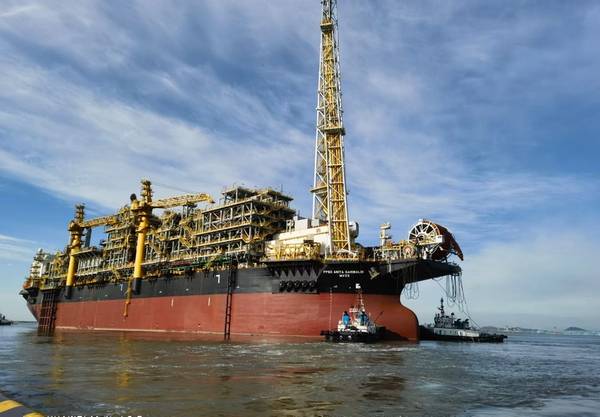
Nov. 8 (PN) On the eve of completing 50 years of production, the Campos Basin finds itself at a decisive juncture for its future within the Brazilian oil and gas industry. Responsible for more than half of all the oil ever produced in the country, the region is now grappling with the effects of field maturity, aging infrastructure, and the need to reduce operational emissions. In the new “Oil and Natural Gas Production” section of the Ten-Year Energy Expansion Plan 2036 (PDE 2036), the Energy Research Office (EPE) indicates that the basin’s continued relevance will depend on the ability to revitalize assets, optimize existing infrastructure, and make progress in decarbonization.
The document highlights the gradual decline in the Campos Basin’s share of national production. In 2021, the basin accounted for 27% of the oil and gas produced in Brazil; by 2024, this figure had fallen to 20.6%. One consequence of field maturity is an increase in water production—which has exceeded oil production since 2015—placing strain on processing capacity and adding complexity to operations. Furthermore, the aging of platforms and other facilities necessitates growing investments in modernization, replacement, or decommissioning.
Another challenge concerns the carbon intensity of operations. According to the EPE, the Campos Basin has an average emission level of 25.3 kgCO₂e per barrel of oil equivalent (boe), which is higher than the 16.0 kgCO₂e/boe average recorded for the Brazilian upstream sector as a whole. The EPE suggests that measures such as reducing emissions, improving gas utilization, and enhancing energy and operational efficiency could help extend the economic viability of these mature fields. The EPE points out that, although the Campos Basin is no longer the primary frontier for offshore growth—a position currently held by the pre-salt region of the Santos Basin—it still possesses an extensive installed base and spare capacity within certain systems. These characteristics create opportunities for revitalization projects, subsea tiebacks, infill drilling, and exploration efforts focused on leveraging existing infrastructure, thereby reducing the need for new facilities.
Among the initiatives highlighted in the document is the Marlim revitalization project, which involves replacing nine platforms with two new FPSOs (the Anna Nery and Anita Garibaldi, both already in operation). This initiative allows for the reconnection of wells and an increase in water-processing capacity, demonstrating how the modernization of facilities can restore efficiency and sustain production in mature fields.
Another example is the Wahoo-Frade project, which utilizes a subsea tieback spanning approximately 30 to 35 kilometers to the Valente FPSO. This connection has added over 40,000 barrels of oil equivalent per day at peak production, without the need to install a new floating production unit. This strategy enables the use of existing structures to develop reserves located near established production systems.
Regarding decarbonization, the EPE also mentions the electrification project for the Pargo Hub, which aims to replace a portion of the power generation on board the platforms with electricity supplied from an external source. This measure can reduce emissions associated with power generation and facilitate greater integration with lower-carbon energy sources.
The report further highlights the potential for carbon capture and storage (CCS) associated with the Cabiúnas facility in Macaé (Rio de Janeiro state). Its proximity to processing and transport infrastructure creates opportunities to integrate existing assets with offshore CO₂ storage solutions. The technology enables the capture, transport, and permanent storage of gas, offering an alternative for reducing residual emissions from oil and gas production and industrial processes.
According to the EPE (Energy Research Office), these initiatives demonstrate that decarbonization and competitiveness can advance in tandem within the Campos Basin. Combining field revitalization, shared use of infrastructure, a reduction in gas flaring, electrification, and CCS (carbon capture and storage) can help extend the productive life of assets while lowering emissions associated with operations. At the same time, it will be necessary to assess the economic viability of the facilities, ensuring the responsible decommissioning of those that are no longer suitable for continued operation.


Leave a Reply