Aug. 27 (oilprice.com) Alongside boosting exploration and production offshore its home market Norway, Equinor is pursuing an international growth strategy, aiming to significantly increase its overseas oil and gas output by focusing on fewer but more lucrative regions such as the U.S., Brazil, and Angola.
In recent years, Equinor has streamlined and high-graded its portfolio outside Norway, selling assets and positions in Azerbaijan and Nigeria, to name a few.
But Equinor has kept and grown its U.S., Brazilian, and Angolan businesses, and plans to keep these growing through 2030, the company’s executives said at the Offshore Northern Seas (ONS) energy conference in Stavanger this week.
Equinor’s international production averaged 750,000 barrels of oil equivalent per day (boepd) in the second quarter of 2026. The company expects to raise this to 950,000 boepd by 2030, by boosting the U.S., Brazilian, and Angolan output, executive vice president Philippe Mathieu said at a press briefing in Stavanger on Tuesday.
“Equinor’s international oil and gas portfolio is simplified, improved and set for significant growth,” Mathieu said.
“This is not just about production growth. Through portfolio high grading we are building a business with stronger margins and higher cash flow,” the executive added.
“Cash flow from production is expected to grow around 80% towards 2030, significantly faster than production, reflecting a more competitive and resilient portfolio.”
In the two years to 2026, Equinor raised its international oil and gas production by 10% despite exiting from legacy markets such as Azerbaijan and Nigeria.
The increase was mostly driven by surging production in the U.S. and Brazilian assets.
Equinor’s production in the United States jumped to 433,000 boepd in the second quarter of 2026, up by 100,000 boepd compared to the same quarter of 2024.
Equinor has a participating stake in a new project expected to bring more production by the end of the decade. It is a shareholder with 49% in the Sparta project in the deepwater U.S. Gulf of Mexico operated by Shell. Currently under construction, Sparta is expected to start operations in 2028 and produce up to 90,000 barrels of oil equivalent a day, enough to fuel the daily journeys of about 2 million cars in the U.S., Shell says.
“The US is by far our largest country outside Norway in terms of production. We have deepened our position in onshore natural gas assets in a growing demand region where we also can utilise the company’s marketing, trading and power exposure to capture more value across the gas value chain,” Equinor’s Mathieu said, adding that the company’s recently announced power position in a gas-fired power plant in Pennsylvania is “another example of this strategy in action.”
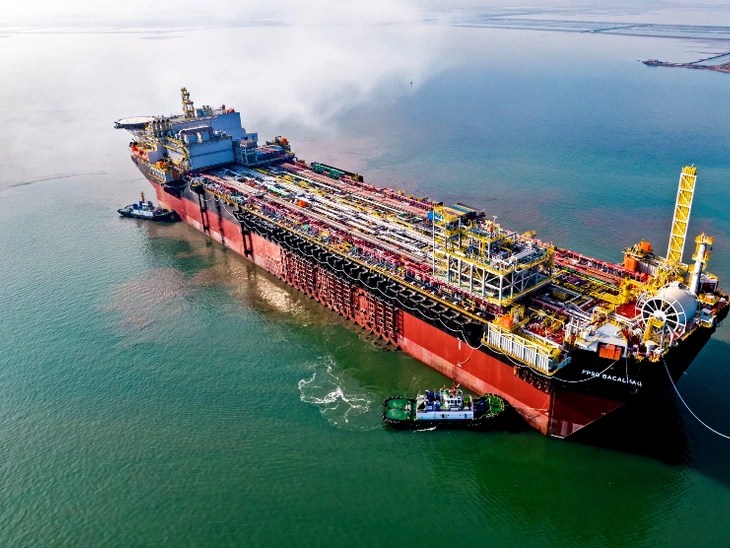
Brazil is also expected to be a key growth driver of Equinor’s international production. Offshore Brazil, the Equinor-operated Bacalhau field, the first Brazilian pre-salt field developed by an international company, came on stream late last year and continues to ramp up production “from wells that are exceeding expectations,” the Norwegian major said.
Equinor is also progressing the Raia gas field development, which is slated for start-up in 2028. Once in operation, Raia could supply around 15% of Brazil’s total projected gas demand.
The other major international growth driver will be Angola in Africa, where Equinor is applying its experience in extending the life of fields offshore Norway.
Earlier this year, Azule Energy sanctioned the development of the Greater PAJ (Palas, Astrea and Juno) project, in which Equinor has a minority stake. Greater PAJ, planned to come on stream in 2029, it will unlock around 250 million barrels of resources and contribute to sustaining Angola as an important production hub for Equinor, the Norwegian company said.
Apart from opportunities under development, Equinor is also pursuing exploration opportunities in Brazil, Angola, and most recently, Namibia. Equinor hopes to make a “pretty big” offshore discovery in the exploration hotspot it has just entered by buying into a Chevron-operated license with a drill-ready prospect.
“We are also assessing and maturing exploration opportunities in Argentina and the US. We are gradually stepping up our exploration activity to support a focused strengthening and replenishment of our international portfolio,” Mathieu said.
By Tsvetana Paraskova


Leave a Reply