Aug. 3 – In June 2026, Brazil produced 5.842 million barrels of oil equivalent per day (boe/d) of oil and natural gas. The data was released today (August 3) by the ANP in the Monthly Oil and Natural Gas Production Bulletin.
Regarding oil, 4.475 million barrels per day (bbl/d) were extracted, an increase of 4% compared to the previous month and 19.1% compared to the same month in 2025.
Natural gas production in June was 217.35 million cubic meters per day (m³/d). There was a 5.5% increase compared to May and a 19.7% increase compared to June 2025.
Pre-salt
Total production (oil + natural gas) in the pre-salt layer in June was 4.788 million boe/d, accounting for 82% of Brazilian production. Production saw a positive variation of 4.2% compared to the previous month and 24% compared to the same month in 2025.
A total of 3.699 million bbl/d of oil and 173.19 million m³/d of natural gas were produced from 198 wells.
Natural gas utilization
In June, natural gas utilization was 97%. A total of 64.36 million m³/d was made available to the market, and flaring amounted to 6.63 million m³/d. There was a 12.9% increase in flaring compared to the previous month and a 10.1% increase compared to June 2025.
The rise in flaring is primarily due to the commissioning of the P-79 platform in the Búzios field.
Production sources
During the month, offshore fields produced 98.1% of the oil and 87.6% of the natural gas. Fields operated by Petrobras—either alone or in a consortium with other companies—accounted for 87.08% of total production. Production originated from 6,579 wells: 608 offshore and 5,971 onshore.
Fields and facilities
In June, the Búzios field, located in the Santos Basin pre-salt area, was the largest oil producer, recording 1.02 million bbl/d. Meanwhile, the Mero field—also in the Santos Basin—was the largest natural gas producer, with 48.73 million m³/d.
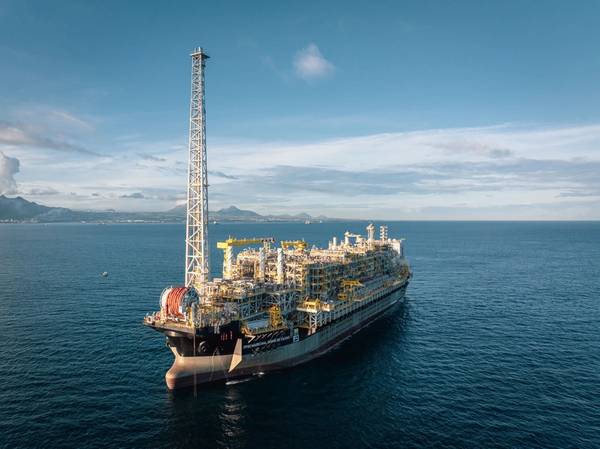
The facilities with the highest production levels were the FPSO Almirante Tamandaré in the Búzios field for oil (253,801 bbl/d) and the FPSO Marechal Duque de Caxias in the Mero field for gas (13.36 million m³/d).


Leave a comment