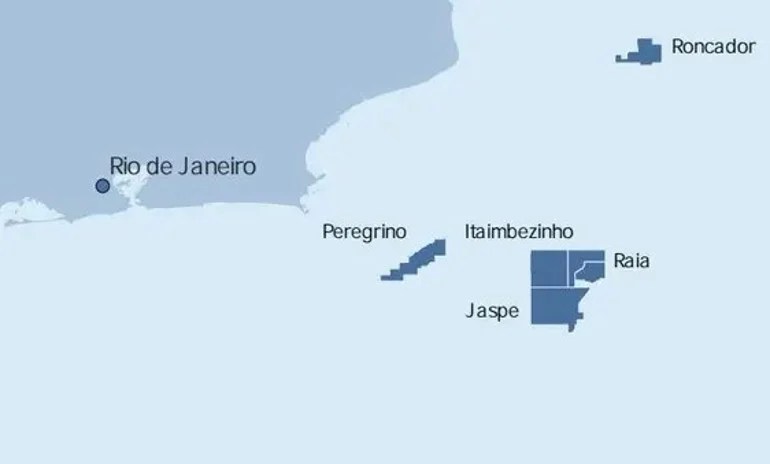
July 2 (cenarioenergia) – The Administrative Council for Economic Defense (Cade) has approved, without restrictions, Petrobras’ entry into the Itaimbezinho exploration block, located offshore in the Campos Basin and contracted under the production-sharing regime. The transaction involves acquiring a 50% stake currently held by Equinor—a move that reinforces the Petrobras’ strategy to expand its exploration portfolio and strengthen its position in the natural gas market.
Although the antitrust regulator’s approval removes a significant regulatory hurdle, the deal’s completion remains subject to authorization from the National Agency of Petroleum, Natural Gas and Biofuels (ANP), which is responsible for ratifying the transfer of contractual rights and obligations.
This move comes amid an intensified search for new natural gas reserves in the country—a fuel considered strategic for Brazil’s energy security and for expanding thermoelectric generation to support the growing share of renewable sources in the National Interconnected System (SIN).
Transaction reshapes the block’s ownership structure
Prior to the transaction’s completion, the Itaimbezinho block consisted solely of Equinor Brasil (as operator) and Pré-Sal Petróleo (PPSA), representing the Federal Government in the management of production-sharing contracts. With Petrobras’ entry, the consortium’s composition will be restructured; the Brazilian state-owned company will assume half of the Norwegian company’s stake and begin sharing the area’s exploration investments and risks.
The asset was acquired by Equinor in October 2025 during the third cycle of the Permanent Production-Sharing Offer (OPP) conducted by the ANP. At the time, the company submitted a bid offering a 6.95% oil surplus share to the Federal Government—the criterion that determined the auction’s winner. Cade’s approval marks another step in consolidating strategic partnerships among major international operators in Brazil’s offshore sector, particularly regarding assets with high exploration potential.
Petrobras targets reserve replenishment and gas market expansion
The acquisition aligns with Petrobras’s strategic plan, which prioritizes rebuilding its exploration and production portfolio, with a special focus on assets holding natural gas discovery potential. In a submission to Cade, the company highlighted that the region offers geological conditions favorable to identifying commercial gas volumes and presents opportunities for operational integration with existing assets in the Campos Basin.
This move also responds to the country’s growing demand for natural gas—both for industrial supply and the power generation sector, the latter playing an increasingly vital role in ensuring energy security and meeting system power demands.
Proximity to existing infrastructure can lower development costs and accelerate potential production and off-take projects, thereby enhancing the venture’s economic attractiveness.
Equinor bets on risk-sharing and portfolio optimization
For Equinor, the partial sale of its stake in Itaimbezinho is part of a global strategy to optimize its portfolio and allocate capital. The company has been expanding partnerships in projects deemed strategic, sharing investments and risks in assets involving greater exploration complexity.
The company believes that Petrobras’s entry adds technical expertise and strengthens the area’s development potential, particularly given the state-owned company’s experience in the Campos Basin and existing synergies with neighboring projects. The two companies already partner on major offshore ventures, including the Raia project—developed jointly with Repsol Sinopec—and the Jaspe exploration block.
Campos Basin Returns to the Forefront of Exploration Strategies
Although the Santos Basin pre-salt play has attracted the bulk of oil and gas industry investment in recent years, the Campos Basin has regained prominence in the planning of sector companies. A combination of established infrastructure, accumulated geological knowledge, and new exploration opportunities has driven a fresh wave of investment in the region.
Petrobras’s entry into Itaimbezinho reinforces this trend and signals that natural gas will continue to play a central role in Brazil’s energy strategy—both to ensure domestic supply and to support the expansion of renewable energy sources and the operational security of the power grid in the coming decades.


Leave a comment