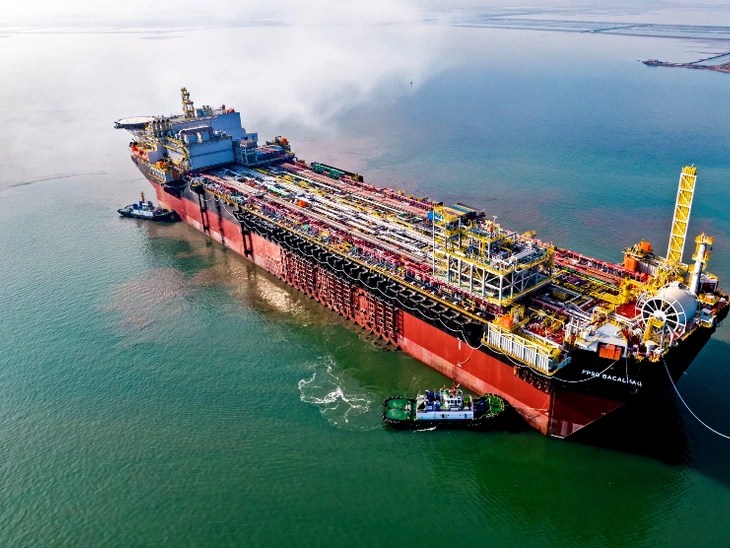
April 23 (OE) Deepwater production continues to remain a core part of the long-term energy supply mix. While production from conventional onshore and shallow-water assets is expected to remain broadly flat under our base case, Welligence estimates that global deepwater oil production will grow from its current level of around 8 million bbl/d to close to 10 million bbl/d by the early-2030s.
However, post-2035, deepwater production is set to enter decline unless the hopper of pre-FID deepwater projects is replenished in the medium to long term. But this will require a tangible step up in exploration investment.
With IOCs maintaining a strong focus on capital discipline and applying strict criteria to new investment, only the most resilient and commercially attractive deepwater projects are progressing to FID. Operators are now leveraging on new technologies and contracting solutions to cut costs, shorten cycle time and improve project economics.
Standardisation and Consolidation
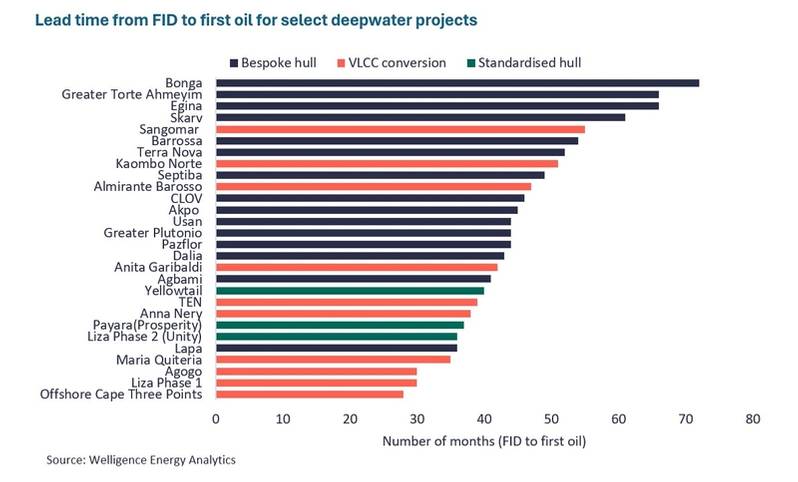
Standardisation is playing a key role in cutting project cycle times and costs and Welligence data highlights a clear correlation between improved project delivery and the deployment of standardised solutions. Both the Payara and Yellowtail deepwater projects in Guyana are based on SBM Offshore’s Fast4Ward standardised hull design and TechnipFMC’s standardised subsea trees — and both projects were delivered ahead of schedule, a remarkable achievement for deepwater developments of this scale and complexity.
 © Welligence
Building on the standardised approach, several IOCs are increasingly embracing the subsea integrated Engineering, Procurement, Construction and Installation (iEPCI) model, which drives stronger contractor engagement and collaboration during the early project phases. Projects such as Shell’s Gato do Mato (Brazil), TotalEnergies’ Gran Morgu (Suriname), and Equinor’s Bacalhau (Brazil) are all leveraging this approach, with schedule compression being the primary commercial driver.
The merger of FMC Technologies, a subsea production specialist, with Technip, a leading SURF contractor, was key in enabling the iEPCI model. The proposed merger of Saipem and Subsea7 will also be looking to deliver integrated solutions.
Read full article: https://www.oedigital.com/news/538399-deepwater-s-playbook-for-delivering-growth


Leave a Reply