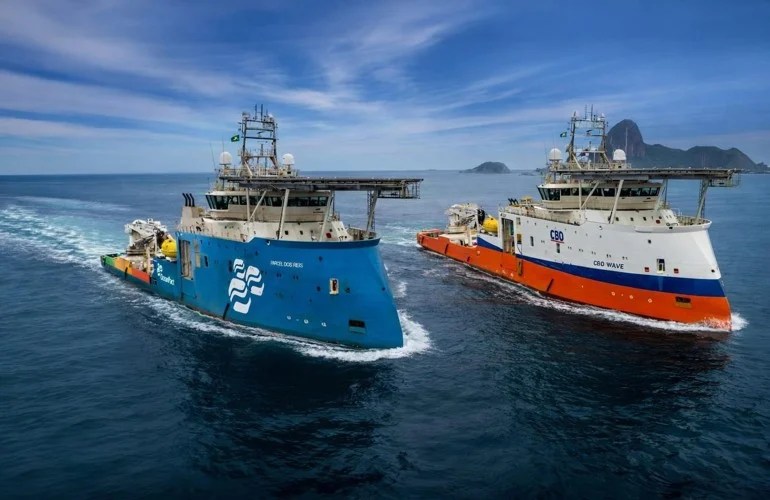
Sept. 25 (TN) Porto do Açu and OceanPact signed a Letter of Intent (LOI) to expand the area occupied by the company at the port-industrial complex in São João da Barra (RJ). The agreement aims to expand OceanPact’s operational capacity and strengthen infrastructure supporting the region’s oil and gas supply chain.
The agreement provides for the immediate availability of approximately 27,000 m² in addition to OceanPact’s current 45,000 m² area at Porto do Açu. Furthermore, the document grants the company a right of first refusal to incorporate an additional 60,000 m², including roughly 100 meters of canal access. The planned expansion will enable the construction of up to 300 meters of private quay to service support vessels and offshore operations.
Present at Porto do Açu since 2014, OceanPact uses the complex’s infrastructure as a strategic base for environmental emergency response, maritime support, and subsea services.
“This partnership expands development opportunities and strengthens Açu’s position as a strategic platform for the oil and gas industry. OceanPact’s decision to increase its presence at the complex reinforces our ability to offer infrastructure and flexibility to companies that need to grow in step with their evolving demands,” says João Braz, Director of Terminals and Logistics at Porto do Açu. “Our partnership with Port of Açu continues to strengthen, enabling the expansion of operations to meet the sector’s growing demand. This project increases our capacity and highlights Açu’s strategic position as a port and logistics hub,” notes Erik Cunha, CCO of OceanPact.
Logistics and offshore services hub
Located opposite the Campos Basin, the Port of Açu houses the world’s largest offshore support base. The facility serves the entire oil and gas value chain, from exploration to platform decommissioning. The Açu port complex handles over 30% of Brazil’s oil exports. Furthermore, the Port leads initiatives for the maritime sector’s energy transition, integrating solutions such as berth electrification, testing of low-emission fuels, and sustainable vessel recycling.


Leave a comment