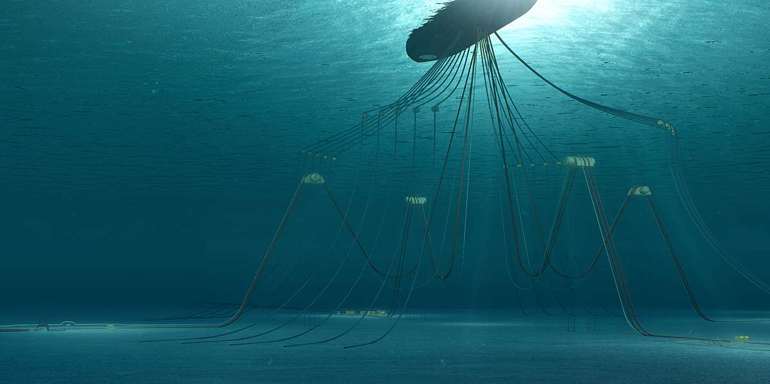
Sept. 16 (PN) MDL has completed a SURF decommissioning campaign using its Wheeled Horizontal Lay System (WHLS) in deep waters off the coast of Brazil, in the Campos Basin. Carried out from a multi-purpose vessel, the project involved the recovery of flexible flowlines, umbilicals, and jumpers associated with a decommissioned FPSO. The client’s name was not disclosed.
MDL provided a complete spread of deck equipment, engineering services, and offshore personnel to support the recovery operations. The scope was based on a feasibility study previously conducted by MDL, which assessed whether the vessel—already chartered by the field operator—could be utilized for this decommissioning campaign, representing a pioneering application of this type.
The FEED (Front-End Engineering Design) phase considered recovery methodologies, product top-tension requirements, reel capacities, deck layout, and preliminary vessel structural considerations. This engineering work guided the selection of the most suitable equipment configuration for offshore execution and provided a preliminary project schedule.
MDL supplied its WHLS-02 wheeled horizontal lay system, a 110-tonne tensioner, a third-generation Reel Drive System (RDS), an FRN-150 offshore winch, and offshore-rated reels. According to the company, the use of the WHLS wheeled lay system reduced the capstan effect during deepwater SURF recovery. This enabled MDL’s single high-capacity tensioner to handle recovery loads of up to 105 tonnes.
“I am very proud to see the successful completion of the recovery campaign in Campos, which further demonstrates MDL’s capabilities and experience in the growing Brazilian decommissioning market,” said Yuri Mendes Martins, MDL’s Country Manager for Brazil. The executive explained that the project progressed from an initial feasibility study to offshore execution, enabling MDL to support the client throughout the project lifecycle. “The engineering work carried out during the planning phase provided a solid foundation for mobilization and the offshore campaign, in addition to helping define the recovery equipment spread installed on the client’s vessel—a type of vessel not typically used for this scope of work,” he detailed.
Finally, Martins noted that the contract expands the company’s track record in Brazil, with projects executed using portable technology aboard client-selected vessels. “This reduces reliance on specialized construction vessels—which are likely tied up in long-term contracts—allowing for more efficient control of schedules and budgets, while also helping operators meet their environmental obligations,” he concluded.


Leave a comment