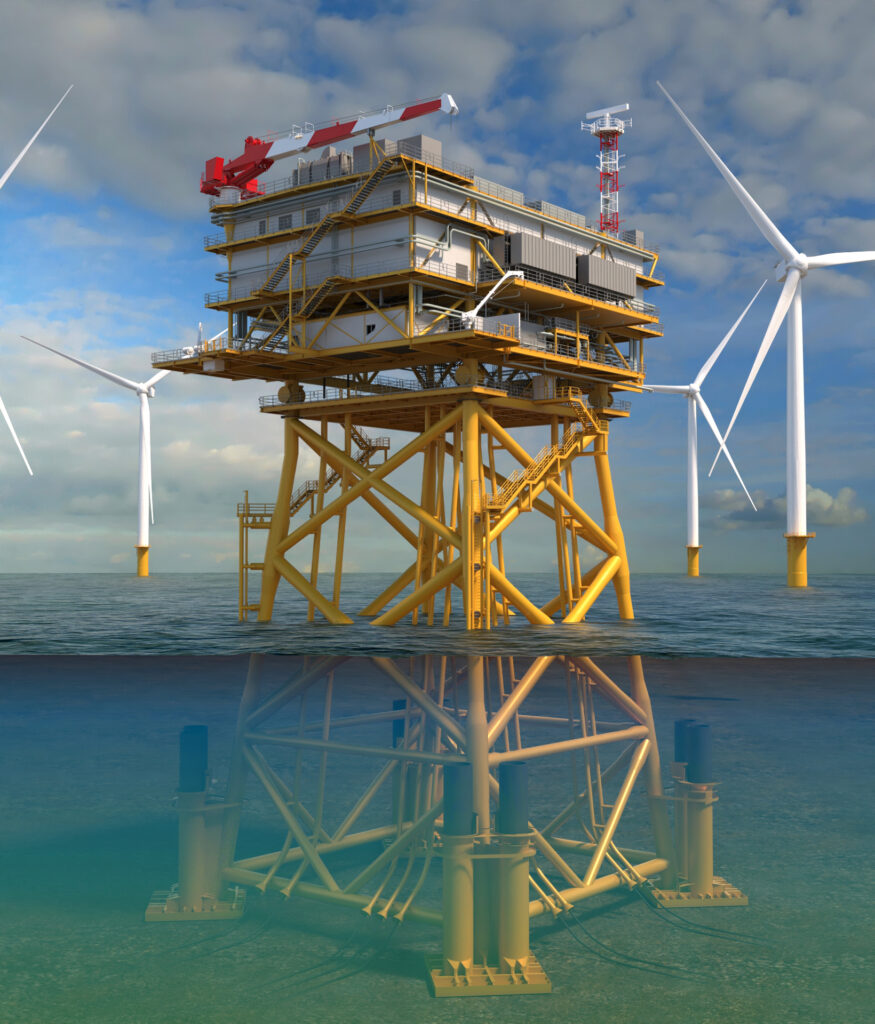
Aug. 13 (Estadao) Seatrium, a marine engineering multinational expanding its global offshore wind operations, sees Brazil as a market ripe for development and hopes to leverage its local infrastructure to manufacture substations and vessels dedicated to the sector. However, the company is making any planning contingent on the maturation of the legal framework. It has taken a seat on the board of the Offshore Wind Coalition (CEM) to work more closely on efforts to regulate the sector.
According to Seatrium’s commercial vice president, Bruno Búrigo, the company’s shipyards in Aracruz (Espírito Santo) and Angra dos Reis (Rio de Janeiro) possess the technical capabilities to handle potential initiatives in Brazil.
“I believe this is a market that will materialize in the long term, and given our capacity, we can certainly handle oil, gas, and wind projects,” he says. “Offshore energy projects offer continuity for the shipbuilding industry and shield companies from the high cyclicality of the oil market,” he adds.
Tangible progress, however, hinges on regulatory details. Although the Offshore Wind Law (No. 15.097/2025) has been passed, the decree to regulate it—originally expected in May—has not yet been published. It was only last month that the Ministry of Mines and Energy (MME) released the methodology that will guide the selection of areas for potential projects off the Brazilian coast, a step that precedes the auctions (which do not yet have a scheduled date).
Through its seat on the CEM board, Seatrium aims to participate in discussions regarding local content and industry digitalization. “We want to contribute to how the industry needs to prepare for offshore wind projects. These projects generate numerous jobs through domestic engineering and attract significant technology. They involve vessels, substations, and foundations, and require skilled suppliers,” he notes. Seatrium aims to replicate in Brazil the pioneering expertise it has gained in European, Asian, and North American markets. Recent milestones include the construction of two offshore substation (OSS) platforms for the Empire Wind 1 and 2 offshore wind farms off Long Island, New York (USA). Meanwhile, in the UK—where it is continuously involved in offshore construction and commissioning—the company acquired a 100% stake in Wave Hub Limited in April; that firm focuses on testing and development infrastructure for marine and offshore wind renewable energy.
“We are bringing technologies established in European and Asian markets to the US market. That is something we would also like to bring to Brazil,” says Búrigo.
Brazil accounts for over 60% of the company’s global revenue; in the first half of 2026, the company recorded revenue of S$ 5.6 billion (Singapore dollars), up from S$ 5.4 billion the previous year. During this period, the offshore wind segment saw a 21% drop in revenue, reflecting a significantly lower contribution from legacy projects and a slowdown in the awarding of project areas.
Nevertheless, the company remains optimistic, expecting the global market to resume its pace of project awards starting in 2027. It projects opportunities within a pipeline exceeding S$ 32 billion over the next 24 months, diversified across oil and gas (approximately S$ 21 billion), offshore wind (approximately S$ 9 billion), and conversions (approximately S$ 2 billion).


Leave a comment