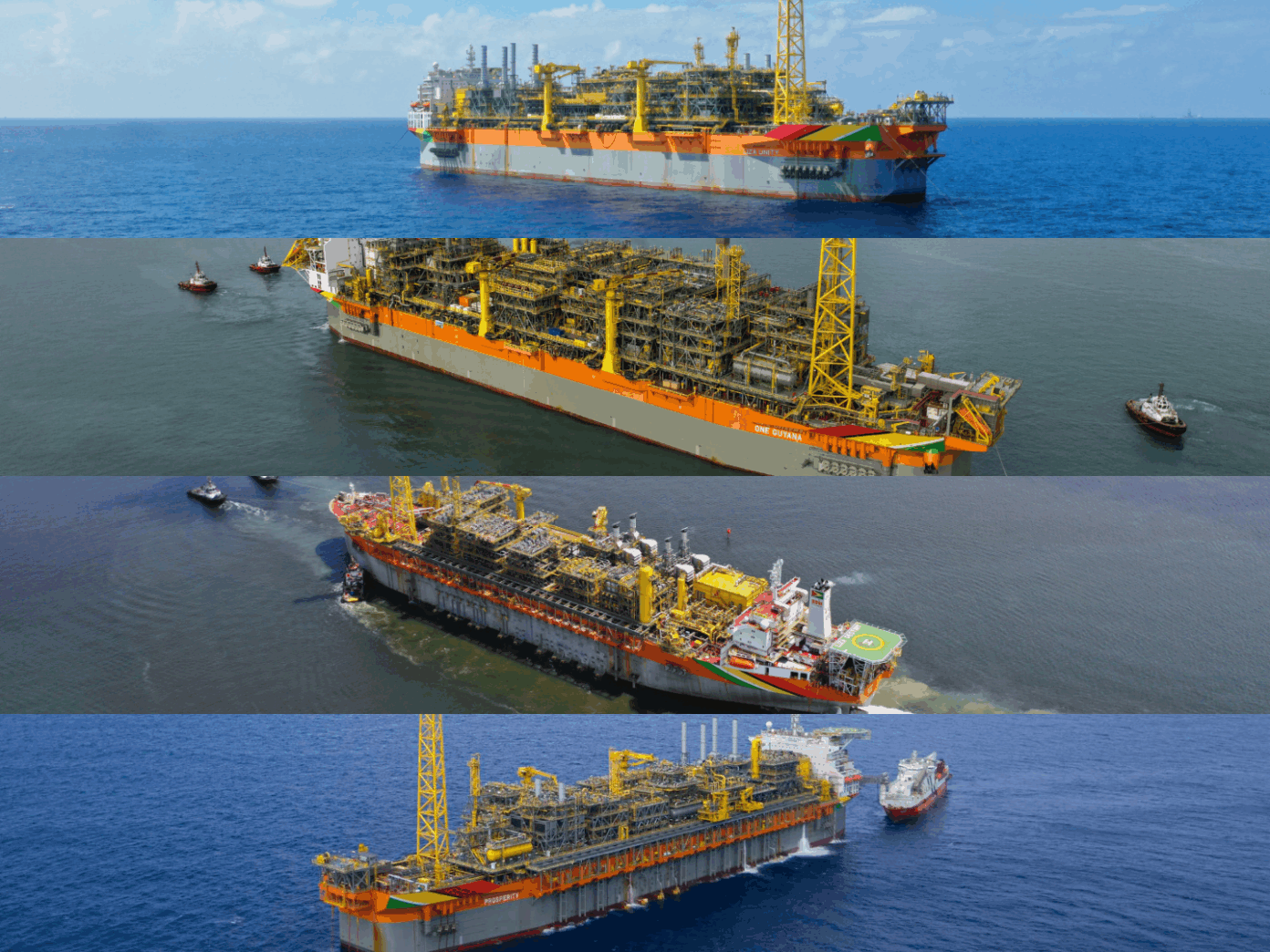
July 27 (oilnow.gy) Guyana’s crude has earned a reputation for being light and sweet, making it attractive to refiners because it is easier and less expensive to process into products such as gasoline, diesel and jet fuel. Increasingly, however, another quality is helping distinguish the country’s barrels in global markets: their relatively low carbon intensity.
As governments, investors and buyers place greater emphasis on greenhouse gas emissions (GHG), the carbon footprint of producing a barrel of oil is an essential measure of competitiveness.
In 2022, Rystad Energy reported that Guyana’s upstream emissions intensity outperformed 75% of oil and gas producing assets worldwide. The firm noted that while the global average upstream emissions intensity is 18 kilograms of carbon dioxide equivalent per barrel of oil equivalent (kg CO2e/boe), Guyana’s projects average just 9 kg CO2e/boe.
Designing projects to emit less
One of the main reasons producing the country’s crude maintains a comparatively low emissions profile is the design of ExxonMobil Guyana’s offshore production facilities.
According to the environmental impact assessments (EIA) for several projects being executed by the US oil major, floating production, storage and offloading (FPSO) vessels are designed with a zero routine flaring system, meaning associated natural gas is reinjected into the reservoir during normal operations instead of being burned.
The EIAs state that gas reinjection helps maintain reservoir pressure to support oil production while reducing methane emissions that would otherwise result from routine flaring. It also lowers carbon dioxide emissions associated with burning excess natural gas.
Methane has become a major focus for regulators because it is one of the most potent greenhouse gases, trapping significantly more heat than carbon dioxide over shorter timeframes.
Measuring emissions before first oil
Under Guyana’s environmental permitting process, every offshore development must estimate its expected greenhouse gas emissions before production begins.
For example, the Liza 1 EIA estimates annual direct GHG emissions of about 540 kilotonnes of carbon dioxide equivalent (ktCO₂e) during normal operations, while Liza 2 is estimated at 770 ktCO₂e and Payara at approximately 1,060 ktCO₂e annually.
The Yellowtail and Uaru developments are expected to generate about 1,680 ktCO₂e and 1,740 ktCO₂e per year, respectively, while the Whiptail EIA estimates annual direct emissions of approximately 1,810 ktCO₂e during operations.
For the proposed Longtail development, the EIA estimates that total estimated annual direct GHG emissions during drilling and installation are expected to grow from 235 kilotonnes per year in 2027 through 2029 to 2,530 kilotonnes per year in 2030 through 2031.
The EIAs further outline mitigation measures designed to reduce emissions throughout the life of the project.
Maintaining a carbon advantage
With these systems in place, the Guyana government, ExxonMobil and its co-venturers expect the country to remain a net carbon sink even at peak Stabroek Block production, as Guyana’s forests continue to absorb more carbon dioxide than the oil sector emits.
ExxonMobil is currently producing more than 900,000 barrels of oil per day from the Liza 1, Liza 2, Payara, and Yellowtail projects, which are supported by the Liza Destiny, Liza Unity, Prosperity, and ONE GUYANA FPSOs, respectively.
ExxonMobil operates Guyana’s Stabroek Block with a 45% stake, with co-venturers Hess 30%, and CNOOC 25%. The Stabroek Block’s estimated resource base is approximately 11 billion oil-equivalent barrels.


Leave a comment