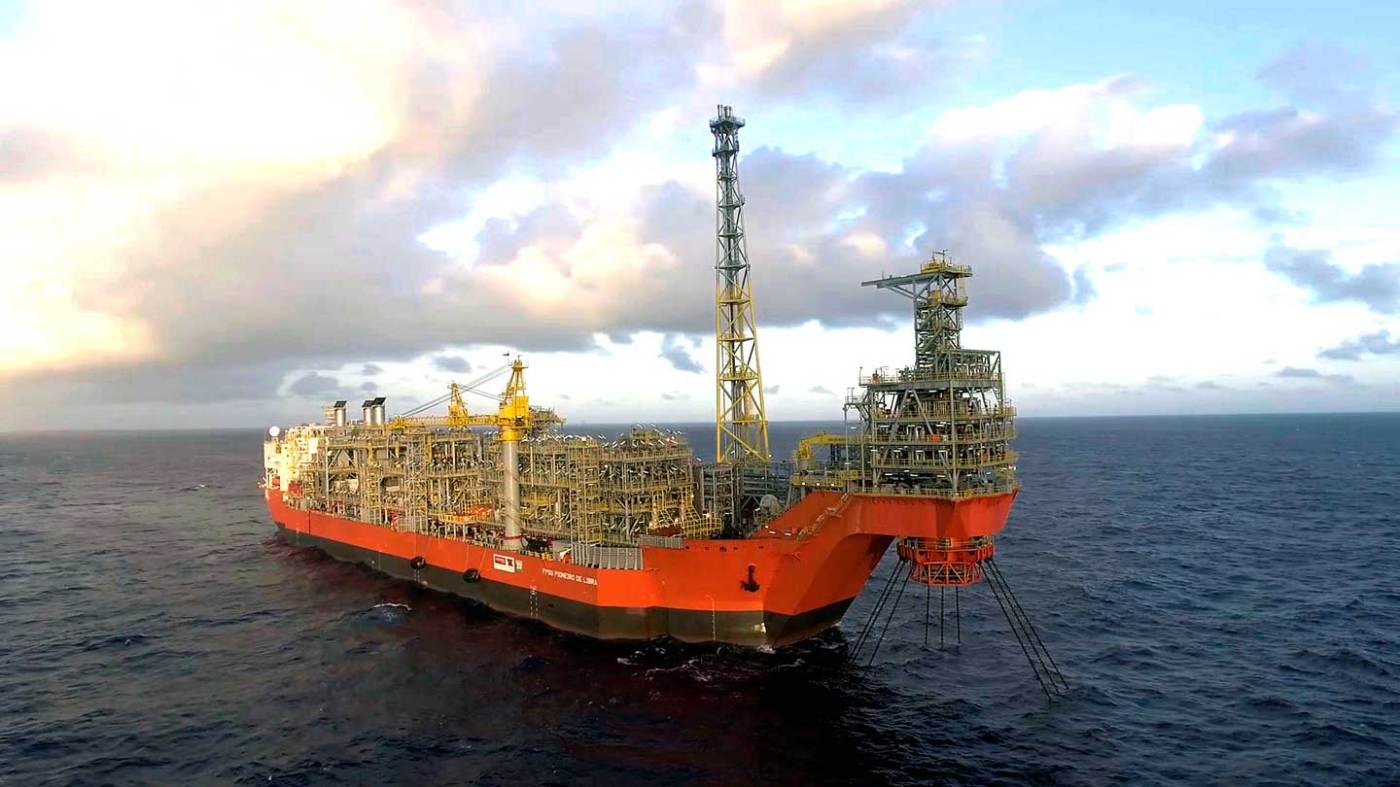
The FPSO Pioneiro de Libra (PDL), an asset of the Altera&Ocyan joint venture, has just completed six years of operation, in the same year that the Brazilian Pre-salt celebrates seventeen years of its discovery. Since the first oil, in 2017, the platform ship, responsible for the Long Term Test (TLD) and the Early Production Systems (SPA) in the Libra block, has already produced more than 68 million bbl of oil.
Over the period, the FPSO Pioneiro de Libra processed 4.6 billion m3 of gas, part of which was consumed in the production unit and the remainder reinjected into the reservoir. Currently, the FPSO has been reaching records, reaching a daily production rate of more than 50 thousand bbl/day and an annual operational efficiency of over 98%, close to the record of 99.85%, recorded in 2020. Furthermore, the unit recorded 1,744 days without the occurrence of lost-time accidents, which reinforces Altera&Ocyan’s commitment to the strictest safety standards.
Marcelo Marques Nunes, general director of Altera&Ocyan, highlights the intensity and complexity of operations that occur uninterruptedly, including scheduled maintenance periods: “Operating with numerous simultaneous activities, surrounded by different energy sources and under the highest regulatory standards, represents a constant challenge, which requires attitude, precision and resilience.” To overcome the challenges inherent to offshore management, the executive highlights that the company has assembled a team of highly qualified professionals, who contribute to the success of the PDL.
For Thales Moran, Operations Manager of the FPSO Pioneiro de Libra, the vessel is preparing to write a new chapter of achievements: “It is an honor to be part of the FPSO Pioneiro de Libra team and, in such a significant way, to contribute to the history of the Brazilian pre-salt, a milestone that boosted the country and the production of oil and gas”, reinforces Moran.
In 2023, Altera&Ocyan implemented a comprehensive Planning, Maintenance & Integrity program, in addition to process optimization initiatives, operational risk mapping and the use of active listening to achieve precision in decision making. For 2024, the company wants to improve its high-performance culture and operational discipline, with safety, integrity and focus on people.
The platform vessel is the first vessel to produce in Campo de Mero, in the Libra Block, one of the largest Brazilian pre-salt reserves, located in ultra-deep waters in the Santos Basin, approximately 190 km off the coast of the state of Rio de Janeiro, according to the National Petroleum, Natural Gas and Biofuels Agency (ANP). The unit is part of a robust program by the Libra Block, which aims to obtain information to define the best development strategy for the entire area.
The client Consórcio de Libra, with Petrobras as operator. carries out Long Term Tests (TLD) and Early Production Systems (SPA) to obtain robust and reliable data about the reservoir. Initially, the FPSO Pioneiro de Libra was installed in the Mero 2 region in the Central portion of the field and, in 2021, relocated to the Mero 4 region in the Northern portion, where it is currently located. The platform vessel has a Turret-type anchoring system, which facilitates location changes and reinforces the versatility of the asset.
Since the production of the first oil, it is estimated that the FPSO Pioneiro de Libra has contributed to the generation of more than 2 thousand direct and indirect jobs, onshore and offshore.
Recognition in innovation and sustainability
A pioneer in the Mero field, the asset also stands out in technology and innovation, where in 2019, through Petrobras, it received one of the most renowned awards in the oil and gas industry, granted by the Brazilian edition of the Offshore Technology Conference (OTC Brasil) : the Distinguished Achievement Awards. The recognition was given for the set of innovations implemented for the Long Duration Test (TLD), in the Santos Basin pre-salt.
The FPSO Pioneiro de Libra has also been a hotbed of the Ocyan Waves Program, which fosters ongoing partnerships with startups. Among the main ones, initiatives to digitize checklists and regulatory inspections stand out; the integration of SCADA system data for real-time monitoring of operations and, more recently, the application of non-intrusive technology and sensing to detect gas valve leaks.
In the scope of sustainability, in 2023, the FPSO Pioneiro de Libra aligned the second bank of membranes to remove carbon dioxide, reducing the emission of up to 12 thousand tons of CO2 per year into the atmosphere.
In the same year, the unit became self-sufficient in the production of drinking water for industrial use, through the retrofit of the reverse osmosis water production unit, increasing the original generation capacity from 50 to 480 m3 per day.
Also noteworthy is the pioneering operation using “dead oil”, produced by the producing well and stored in a cargo tank for use in bull heading operations, replacing the conventional use of diesel oil.
Altera&Ocyan Partnership
The FPSO Pioneiro de Libra is owned by the joint venture between the Brazilian company Ocyan and the company with Norwegian roots Altera Infrastructure (50/50) and has a contract to serve the Libra consortium, which operates the Mero unitized field, formed by the companies Petrobras (Operator, with 38.6%), TotalEnergies (19.3%), Shell Brasil (19.3%), CNPC (9.65%), CNOOC (9.65%) and Pré-Sal Petróleo (PPSA) (3.5%), as a representative of the Union in the non-contracted area.
Construction of the FPSO began at the end of 2014 at the Jurong shipyard in Singapore. In over just two years, approximately four thousand people were involved in the project, including activities at the shipyard, with more than 19 million man-hours worked, with no record of any work-related accident resulting in lost time. The partnership with Altera Infrastructure began in 2011 with the construction project of the FPSO Cidade de Itajaí, with a production capacity of 80 thousand bbl/day.
Technical data of the FPSO Pioneiro de Libra:
The FPSO (Floating Production Storage and Offloading) is a type of vessel used by the oil & gas industry for production, storage and flow of production via shuttle ships and/or gas pipelines.
Operation: 12 years of charter and service contract with Petrobras – Long Duration Test and Early Production Systems in the Libra Block
Location of operation: Santos Basin
Production capacity: 50,000 bbl/day and compression and reinjection of 4,000,000 Sm3/day of associated gas
Operating depth: Water depth of up to 2,400 meters.
 Brazil Energy Insight
Leave a comment