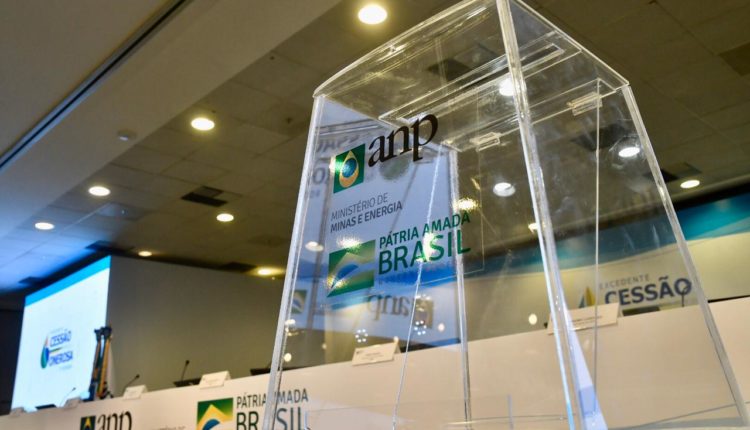
(Valor) The auction of the surplus volumes from the transfer of rights in Sépia and Atapu, carried out by the National Petroleum Agency (ANP) on Friday, marked the end of the large pre-salt auctions. A survey shows that, eight years after the bidding for the Libra area (today Mero), the first round under the country’s sharing regime, 15 different companies paid BRL 117.9 billion to the Union to position themselves in the Brazilian pre-salt, one of the most coveted exploratory frontiers by oil companies in the world in the last ten years.
The Brazilian Petroleum Institute (IBP) highlighted, in a note, that the auction of surplus volumes from Sépia and Atapu represented the “last opportunity to access large volumes already discovered in the pre-salt”. The great attraction of the areas lies in the fact that they are already in production and guarantee buyers a source of immediate cash generation.
With the negotiation of Sépia and Atapu, the government exhausted the tender for the most promising assets in the layer below the salt. The plan now is for the pre-salt areas to be offered in the “permanent offer” – a bidding mechanism on demand in which the ANP offers the market a menu of assets that are permanently available for oil companies to express interest in anytime.
The National Energy Policy Council (CNPE) took a first step towards the end of conventional auctions, by announcing this month the inclusion, in the permanent offer, of the six exploratory blocks that would be offered in the 7th and 8th sharing rounds in the coming years . Also included, in the on-demand contracting modality, were five blocks that were offered without success in past tenders.
In all, five companies took advantage of Sépia and Atapu to strengthen their positions in the pre-salt polygon – an area of 149 thousand square kilometers in the territorial sea, between Santa Catarina and Espírito Santo, which gathers the main assets of the Brazilian pre-salt. Among the winners, Petrobras stood out, which used its preemptive right, provided for by law, to purchase the two areas as operator, in partnership with TotalEnergies, Qatar Petroleum (QP) and Petronas in Sepia and with Shell and TotalEnergies in Atapu.
For the head of research for oil exploration and production at Wood Mackenzie in Latin America, Marcelo de Assis, the auction’s result was not surprising, as he confirmed Petrobras as operator of the two areas. Shell and TotalEnergies – partners of the Brazilian company in the shared deposit of Atapu, which is connected to concession BM-S-11A (West of Atapu) – were also natural candidates.
The Brazilian state-owned company, responsible for discovering the pre-salt, was the main protagonist in the sharing auctions. Even recovering from a financial crisis, in recent years, the company disbursed R$ 79.6 billion to acquire 13 of the 19 areas offered by the Union since 2013 under the sharing regime. The survey includes both the six pre-salt rounds and the two auctions of surpluses from the transfer of rights, promoted under the same contractual regime.
“The assets [Sépia and Atapu] will increase the relevance of the pre-salt areas in Petrobras’ portfolio, which is in line with its current capital allocation”, pointed out the analyst at Ativa Investimentos, Ilan Arbetman.
Petrobras’ dominant position reflects the legal protection that the state-owned company has in sharing auctions. The company has the right of preference for all areas offered.
The entry of new agents in the pre-salt polygon gained momentum with the resumption of large sharing auctions in 2017, under Michel Temer’s government, and involves the flexibility of the law that gives the Brazilian oil company the right of preference in the operation of contracted areas under the sharing regime.
The Sharing Law initially provided for the state-owned company to be the mandatory operator in all areas negotiated under the regime, in addition to having a minimum 30% share in each consortium. As of the 2nd and 3rd rounds, in 2017, the company only has the option to exercise preemptive rights to enter the auctioned areas.
Among foreign oil companies, Shell invested the most to expand its position in the pre-salt. In all, the company paid R$5.9 billion in signing bonuses to guarantee seven contracts under the sharing regime, being the operator of three. Despite not operating any contracts, French company TotalEnergies paid R$5.91 billion to be a partner in four areas, including the Libra area.
Other highlights are the Chinese CNOOC and CNODC, which have already paid R$ 5.12 billion and R$ 4.81 billion, respectively. The values were mainly leveraged by the minority participation in the surplus volumes of the Búzios area, purchased in partnership with Petrobras.
Despite the high investments, among the exploratory blocks auctioned under the sharing regime so far, only the Mero area was declared commercial and entered into production. With the exception of the auctioned areas that give access to discoveries that have already been made, the other blocks won in recent years in the sharing rounds, live with doubts regarding their exploratory success.
Assis, from Wood Mackenzie, recalls that, although multinationals have invested heavily in acquiring assets in the region in past auctions, most companies have not yet had a clear return on the viability of recent discoveries.
Petrobras, for example, opted to return the Peroba area, purchased in 2017, after the exploratory campaign in the region resulted in signs of uneconomical oil and gas. In the Saturno area, operated by Shell, the two wells drilled so far were considered “dry”, a name used when there is no significant evidence of oil and gas.
 Brazil Energy Insight
Leave a comment