January 22, 2020
By Marcus D’Elia
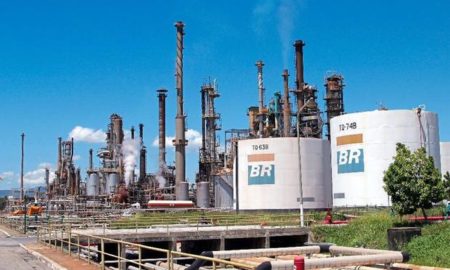
The long-awaited competition in the oil and gas market may delay more than expected. According to a study by Leggio, the sale of the eight refineries by Petrobras is not enough to generate competition in this market.
For this to actually happen, it will also be necessary to expand the infrastructure for handling fuels in ports, pipelines and railways, as this way production will flow to consumer regions.
As Petrobras did not design refineries to compete with each other, they are located in regions that are distant from each other. Therefore, it is necessary that there is port capacity to carry out the transportation of the product across the country.
In Bahia, the handling capacity of the Aratu port terminal represents only 5% of the production volume of the RLAM refinery, severely limiting the possibility of competition with products from other sources in this market. In Rio Grande do Sul, the Port of Rio Grande is far from the Refap refinery and there are no liquid terminals on the north coast of the state and on the south coast of Santa Catarina.
These factors leave the product that will compete with the refinery far from the consumer market, increasing costs and, therefore, limiting competition. The lack of capacity for handling fuels in ports in these states will also make competition more difficult through imported products and should expand the margin for refiners established in these locations.
The alternative to competition would be the competition for fuel transported from other refineries through the road modal, also limited by cost.
To resolve these issues, two aspects are fundamental: the increase in cabotage transport and the expansion of port infrastructure and the internalization of products – via pipelines and railways.
For that, it is important the focus of the federal government to develop terminals not only in these locations where there is a strong limitation, but also in ports such as Santos, Paranaguá and Suape, which will be of great importance in guaranteeing supply at competitive prices for the consumer.
Some measures could be implemented directly: one of them is the Ministry of Infrastructure giving priority to auctions and authorizations for maritime terminals in the states of Bahia, Santa Catarina and Rio Grande do Sul.
It is also essential to encourage rail transport to internalize fuels, improving existing concession contracts, fostering the diversity of cargo in transportation and facilitating the movement of fuels and chemicals.
Another important point is the expansion of the “BR do Mar” program, which today focuses mainly on the transport of containers, with specific measures to reduce the costs of cabotage of liquid bulk, whether fuel or chemical.
All of these actions would have a positive impact on expanding the logistics infrastructure for handling fuels, which will be crucial for the consolidation of competition in the oil products market in Brazil.
Source: epbr
 Brazil Energy Insight
Leave a comment