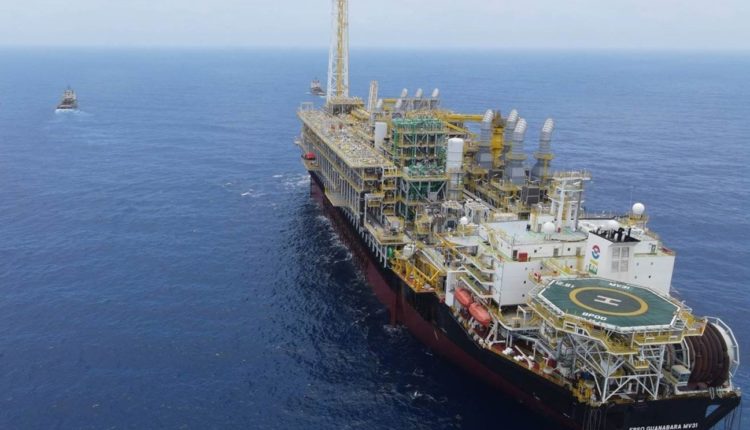
Global floating hydrocarbons and electricity production and storage infrastructure (floating units) has a sizeable development pipeline through 2035, but the gap between identified projects and committed work is substantial.
Intelatus Global Partners tracks 711 floating units worldwide, including 232 planned or on-order facilities with expected first-production dates in 2026–2035 .
The commercial implications extend beyond floating unit construction. A deepwater FPSO in LATAM, a SEMI in the Gulf of Mexico, and an FSRU at a coastal terminal involve different mooring systems, installation sequences, and vessel requirements. For mooring suppliers and offshore support vessel owners, project maturity, water depth, and regional charter conditions will determine how much of the identified pipeline becomes executable work.
A Large Fleet, but Not a Single Market
Analysis covers 460 installed, 72 on order, 174 planned, and five available units. APAC leads the installed fleet with 137 units, followed by LATAM (93) and Africa (89). FPSOs account for 181 installed units, ahead of FSOs (74), FSRUs (48), and SEMIs (40) .
APAC, LATAM, and Africa together account for 492 of the 711 recorded units, but their status mix distinguishes operating assets from prospective work (Figure 1). 174 planned units outnumber the 72 on order by more than two to one, and the main uncertainty is how much of that prospective work becomes contracted installations.
Where the Units Are
LATAM has 99 FPSOs among 145 units, whereas the Gulf of Mexico has 25 SEMIs and only ten FPSOs. The Mediterranean Sea is dominated by FSRUs (20 of 34 units), a different installation market from offshore production.
\APAC has the largest regional fleet (217 units), spread across 74 FPSOs, 50 FSOs, 25 FSRUs, and other designs. Its 68 projects dated 2026–2035 span production, storage, and LNG import rather than one offshore installation profile.
As for water depths, regional means are 1,564 m in LATAM, 1,402.3 m in the Gulf of Mexico, 889 m in Africa, 509 m in the Mediterranean Sea, 328 m in APAC, and 297 m in North Europe . However, APAC’s lower average masks considerable variation — Indonesia and India are emerging as markets for ultra-deepwater drilling.
Yet a simple geographical unit count is an incomplete measure of supplier demand. Commercial interest is forward-looking.
LATAM has 52 planned or on-order units dated 2026–2035, including 41 FPSOs; Brazil accounts for 30 projects and Guyana for 11. Its 21 units in 2031–2035 give it the largest regional pipeline for that later period.
Africa has 41 planned or on-order units scheduled for 2026–2035, including 23 FPSOs and seven FLNG facilities. Nigeria accounts for 14 projects, while Namibia has six. All 13 African units dated 2031–2035 remain planned, so their conversion into installation work still depends on project sanction and procurement.
The Gulf of Mexico features 21 planned or on-order units dated 2026–2035, including nine SEMIs, versus four FPSOs and four FLNG facilities. Its prospective installation mix therefore differs materially from FPSO-led LATAM.
Read full article: Floating Production Outlook: Pipeline Looks Huge, But Not All Projects Are Created Equal


Leave a Reply