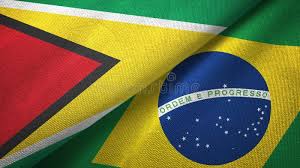
Oct. 6 (oilnow.gy) Brazil’s presidential election is relevant to Guyana’s efforts to maintain peace with Venezuela and strengthen links with its South American neighbors. Brazil has a role in both areas, through diplomacy on the border controversy and cooperation on roads, trade, and energy.
President Luiz Inácio Lula da Silva and Senator Flávio Bolsonaro are heading to a runoff scheduled for October 25, following the October 4 vote. Reuters reported that Bolsonaro received approximately 47%, compared with about 45% for Lula. A runoff is a second round of voting between the two leading candidates because neither received more than half of the valid votes in the first round.
Brazil shares borders with Guyana and Venezuela. Its involvement in maintaining peaceful relations is therefore of direct interest to Georgetown.
Lula was among the principal interlocutors supporting the December 14, 2023 talks that produced the Argyle Declaration. Guyana and Venezuela agreed not to threaten or use force against each other and to avoid escalating tensions. For Guyana, the relevance of the election lies in Brazil’s continued diplomatic engagement. The presidency provides an important channel for regional dialogue while Guyana pursues the judicial route to resolve its territorial controversy with Venezuela.
Lula offers Guyana continuity in a diplomatic arrangement in which Brazil has already played a direct role. A Bolsonaro presidency could bring a different regional foreign-policy approach, particularly toward Venezuela, although he has not publicly outlined a specific position on the Guyana-Venezuela controversy. Regardless of the winner, Brazil’s geographic and economic importance means Georgetown will have a significant interest in maintaining close relations with Brasília.
The territory case at the International Court of Justice centers on the validity of the 1899 Arbitral Award that legally determined the boundary between Venezuela and then-British Guiana. Venezuela accepted the award for decades before declaring it null and void in 1962, laying claim to more than two-thirds of Guyana’s landmass in the Essequibo region.
Regional cooperation also includes plans for a stronger land link between Guyana’s coast and northern Brazil.
Back in 2024, at a meeting in Georgetown, the leaders of Guyana, Brazil, and Suriname emphasized the full paving of the Linden-Lethem road. The route connects Brazil’s Roraima state with Georgetown. The leaders also identified trade and investment arrangements along regional transport routes as priorities.
The Linden-Mabura Hill road forms a key section of that corridor. The 121-kilometer project was being upgraded to connect Guyana’s coast with its hinterland and support the wider land route to Brazil.
The broader aim is to connect northern Brazilian industries with Atlantic shipping routes through Guyana. Road improvements and a proposed deepwater port could provide faster export routes for agricultural products from northern Brazil. This could create opportunities for transport, storage, and port services in Guyana.
The cooperation agenda extends to energy and security. The 2024 trilateral declaration included discussions on oil and gas exploration, production, regulation, and emergency response. It also covered electricity network integration, intelligence exchange, and joint police operations.
Lula, 80, is a left-wing leader seeking a fourth nonconsecutive presidential term. He previously served from 2003 to 2010 and returned to office in 2023. Bolsonaro, 45, is a right-wing senator and the son of former President Jair Bolsonaro, who governed Brazil from 2019 to 2022.


Leave a Reply