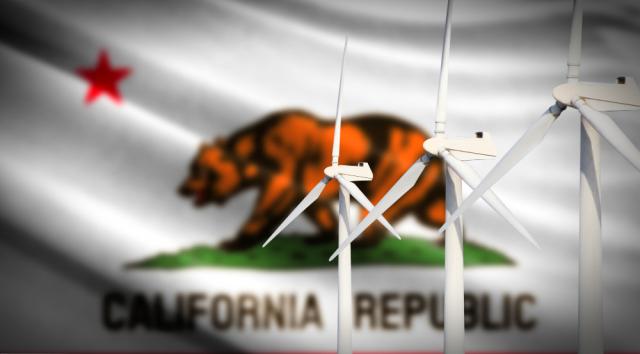
May 25 (offshoreWIND.biz) California remains committed to deploying 25 GW of offshore wind capacity by 2045, according to state officials who were at the recently held 2026 Pacific Offshore Wind Summit, hosted by Offshore Wind California.
David Hochschild, Chair of the California Energy Commission, reiterated California’s offshore wind ambitions and said the state would continue backing the industry through investments in ports and related infrastructure.
Last year, California approved a first USD 228 million (around EUR 196 million) tranche from the USD 475 million (around EUR 408 million) authorised under Proposition 4 to upgrade port infrastructure for floating wind projects, while the California Energy Commission allocated USD 42.75 million (around EUR 36.7 million) for waterfront improvements at the ports of Humboldt, Long Beach, Oakland, Richmond, and San Luis, according to Offshore Wind California.
At the summit, held from 18 to 20 May in Long Beach, the industry and state officials also highlighted the importance of California’s ports in establishing a domestic floating wind supply chain.
“At a time of global energy volatility, offshore wind is not just a climate strategy. It is part of a national security strategy”, said Noel Hacegaba, CEO at Port of Long Beach. “The grid we built for the last century cannot carry us through the next. This is renewable energy’s moment. And at the Port of Long Beach, we are not waiting. We are investing in building the Port of the Future, which will include a diverse portfolio of zero emission technology that requires diversified energy sources.”
California secured five federal floating wind lease areas in 2022 in waters off Morro Bay and Humboldt, with developers committing a combined USD 757 million (around EUR 650 million) in the lease auction.
Earlier the same year, the California Energy Commission adopted the increased offshore wind targets for the state, with a long-term goal to achieve 25 GW of offshore wind capacity by 2045.
According to the National Renewable Energy Laboratory (NREL), recently renamed the National Laboratory of the Rockies (NLR), California has an offshore wind potential of around 200 GW.
Industry estimates cited at the summit suggest that deploying 25 GW of offshore wind capacity could provide up to 15 per cent of California’s future clean electricity demand while supporting thousands of jobs and industrial development.
Industry representatives said the next steps for California’s offshore wind sector include further investment in ports and transmission infrastructure, workforce development, supply chain expansion, and establishing a clearer permitting framework to advance commercial-scale floating wind projects.
California’s renewed commitment comes amid mounting challenges for the US offshore wind sector, with the federal government now negotiating agreements with leaseholders to cancel undeveloped projects in exchange for the refund of their lease payments.
As reported this April, one of the projects also likely to be cancelled, should the developer and the government execute the deal, is located off the coast of California.
The Golden State Wind project, a 2 GW floating wind farm proposed to be built in the Morro Bay Wind Energy Area (WEA), is a joint venture of Ocean Winds and Reventus Power.
Under the agreement with the US government, Golden State Wind will terminate its lease for the floating wind project and will be eligible to recover approximately USD 120 million (around EUR 103 million) in lease fees after making an equivalent investment in US oil and gas assets, energy infrastructure, and/or LNG projects along the Gulf Coast.


Leave a Reply