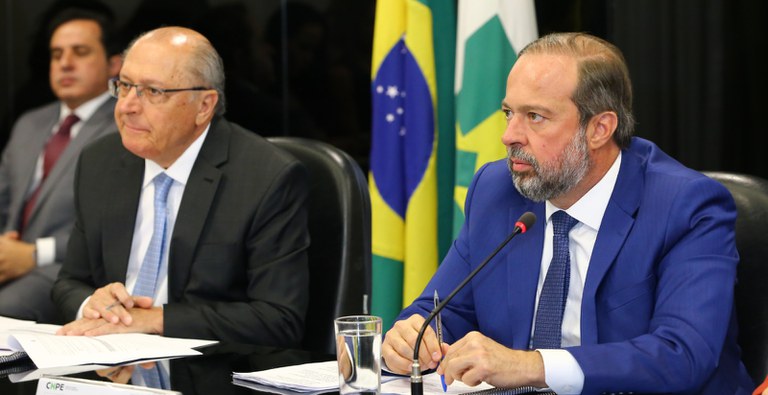
Oct. 1 – The National Energy Policy Council (CNPE) approved, this Wednesday (October 1st), a resolution establishing guidelines for the inclusion of oil and natural gas exploration blocks under the production-sharing regime located beyond 200 nautical miles, in accordance with the Brazilian Continental Shelf Survey Plan (Leplac).
The decision represents a regulatory milestone for the oil and gas industry in Brazil, enabling, with legal certainty, the exploration and production of natural resources in strategic maritime areas outside the traditional territorial sea, where the country exercises sovereign rights over the seabed and subsoil.
“With this decision, Brazil reaffirms its commitment to the sovereign use of its energy resources, boosting investments and expanding the frontiers of oil and gas production in promising areas of the South Atlantic. We already have two blocks under the concession regime beyond the 200 nautical miles that were auctioned during the Lula administration, and now we will provide legal certainty to also advance the production sharing regime,” stated the Minister of Mines and Energy, Alexandre Silveira.
Among the highlights of the new resolution is the possibility of offering the Mogno Block, located in an area of high geological potential that extends across the pre-salt polygon. The measure will allow the inclusion of this block in the next Permanent Production Sharing Offer (PPO), previously authorized by CNPE Resolution No. 11/2023.
The newly approved resolution also stipulates that PPO tenders and contracts must incorporate specific clauses to ensure predictability and legal certainty for agents, especially regarding the legal aspects of exploration beyond the 200-mile boundary, as established by international law and the LEPLAC.
This measure strengthens the Brazilian regulatory environment and signals stability to investors, while contributing to the increase in sustainable oil and natural gas production in Brazil.
 Brazil Energy Insight
Leave a comment