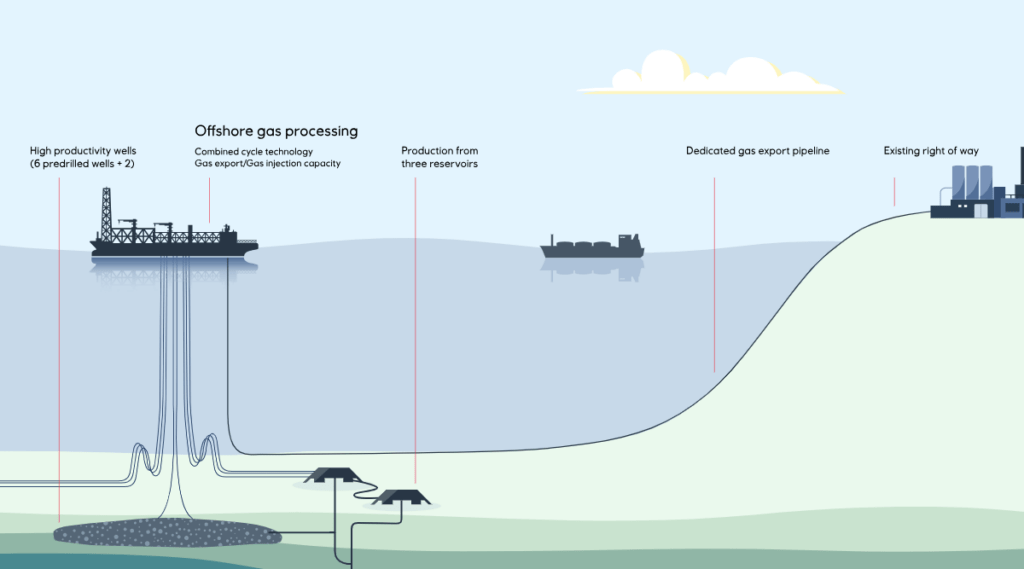
Sept. 23 (PN) Equinor has completed the 15-km shallow-water section of the Raia Gas Pipeline. The 200-kilometer line will connect the Raia FPSO to the gas transmission network near Cabiúnas, in Macaé, Rio de Janeiro. Operations are scheduled to begin in 2028. Installation of the shallow-water section took approximately two months. In the next stage, the pipeline will run approximately 4 km onshore until connecting to the gas transmission network in Cabiúnas.
“We have taken another important step toward the start of operations at the Raia Project, one of the most important natural gas pipelines under development in the country. The completion of the construction of the shallow-water section reinforces the technical capabilities of our team, which, with safety as a priority, will now move on to the remaining phases: the installation of the onshore and deepwater sections up to the FPSO,” stated Pedro Veronesi, Raia Gas Pipeline Manager.
Approximately 20,000 tons of steel were used in the production of the pipes, with over 99% of the material coming from Brazilian suppliers. As a reminder, Equinor signed a contract worth approximately R$2 billion with Tenaris, which will manufacture the pipes at its unit in Pindamonhangaba, São Paulo.
The Raia field is located in the pre-salt layer of the Campos Basin, approximately 200 km offshore, in water depths of up to 2,900 meters. The project will be operated by Equinor (35%), in partnership with Repsol Sinopec (35%) and Petrobrás (30%). The area is estimated to have recoverable oil/condensate reserves exceeding 1 billion barrels of oil equivalent (boe). The project’s gas pipeline will have the capacity to transport 16 million cubic meters of natural gas per day.
The FPSO operating in the field has a capacity of approximately 126,000 barrels per day (bpd). The Japanese company MODEC, responsible for the vessel’s construction, is constructing three topside modules for the platform vessel at the SeatriumFELS shipyard in Angra dos Reis, Rio de Janeiro. The Raia Project is expected to meet 15% of Brazil’s gas demand by 2028.
 Brazil Energy Insight
Leave a comment