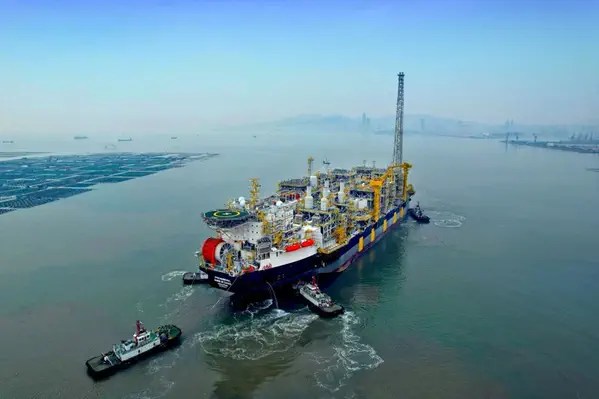
(PN) Petrobras is designing its next offshore projects, making new investments in production units. The company is expected to put into operation six more platform ships (FPSOs) this year and next. In parallel, the company is also preparing a new tender until the end of 2024 to hire ten OSRV-type support vessels (used to recover oil spills at sea).
Still in 2024, the oil company is expected to install the FPSO Marechal Duque de Caxias in the Mero field, in the pre-salt of the Santos Basin. The unit should arrive in the field this semester and start operating by the end of the year, with capacity to extract 180,000 barrels per day at its peak. Next year, the FPSO Maria Quitéria will operate in the Jubarte Field, in the Campos basin. The FPSO will be interconnected to 17 wells, nine of which are oil producers and eight water injectors, through subsea infrastructure consisting of flexible pipelines, electro-hydraulic umbilicals and wet Christmas trees. The unit will have a processing capacity of 100,000 barrels of oil and 5 million m³ of gas per day.
The year 2025 will also be marked by the entry into operation of the FPSOs Almirante Tamandaré and P-78, both installed in the Búzios field, in the pre-salt of the Santos basin. The plants will have the capacity to produce 225 thousand barrels/day and 180 thousand barrels/day, respectively. Finally, Petrobrás will also start operating next year the Alexandre de Gusmão FPSO, in the Mero field, with a capacity of 180 thousand barrels per day.
Meanwhile, the company should launch a new tender in the second half of the year to contract ten more OSRV-type support boats. In April, Petrobras had already launched a notice to hire 12 support vessels of the PSV type.
The director of Production and Exploration at Petrobras, Joelson Mendes, declared that the oil company’s production level in 2024 and 2025 will be stable compared to last year. The executive had already declared that production should only resume growth from 2026 onwards, remaining on an upward trajectory until the end of the decade. He highlighted that, despite the drop seen in the first quarter, associated with maintenance stoppages, the company’s management is optimistic about the future, noting that crude oil production is aligned with the company’s planning outlined in the Strategic Plan until 2028.
The oil company’s director of investor relations, Sergio Caetano Leite, stated that Petrobras predicts that, by the end of the first half of the year, it will have a more accurate view of the feasibility of the company’s return to the Mataripe Refinery. According to him, during a conference call with analysts about the first quarter results, the signs regarding a possible resumption of the refinery, currently controlled by Acelen, from the Arab fund Mubadala, are encouraging. However, analyzes are still ongoing.
 Brazil Energy Insight