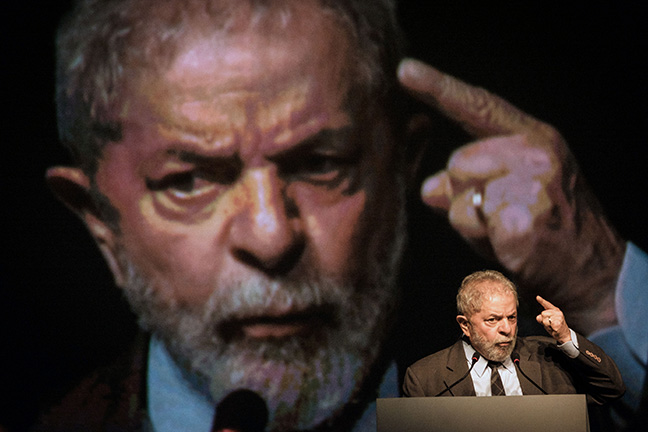
(Bloomberg) President Luiz Inacio Lula da Silva, who has long tried to position himself as an independent arbiter in global conflicts, now faces the uncomfortable task of mediating a crisis between Brazil’s northern neighbors Venezuela and Guyana.
Escalating tensions over Essequibo, an oil-rich region roughly the size of Florida that’s controlled by Guyana but claimed by Venezuela since the 19th century, have suddenly jumped to the top of Lula’s agenda, threatening to overshadow a summit of Mercosur leaders he’s hosting in Rio de Janeiro on Thursday.
Presidents of the South American customs union that includes Brazil, Argentina, Uruguay, Paraguay and newcomer Bolivia are expected to issue a statement referencing the crisis and urging leaders from both nations to seek peace and make decisions based on common sense.
While Lula dreads having to mediate in a regional conflict, he has already accepted the need for South America’s largest country to intervene to tone down the dispute, according to four government officials familiar with the situation.
Luiz Inacio Lula da Silva at the COP28 climate conference in Dubai, days before traveling to Rio de Janeiro for a Mercosur summit.
The leftist Lula, a traditional ally of Venezuela’s Nicolas Maduro and the late Hugo Chavez, spent hours in meetings with his top foreign advisers on Wednesday to discuss the conflict, considered highly sensitive by Brazil’s diplomacy, the officials said, asking for anonymity because the conversations aren’t public. The officials also said Lula is planning to call the presidents of both countries over the next few days.
Brasilia’s main concern: Lula will likely have to walk on a tightrope to moderate a diplomatic crisis between old ally Venezuela and Guyana, which has the backing of Washington — particularly after US giant Exxon Mobil Corp discovered massive oil reserves off the country’s coast.
Things could get even more complicated if Vladimir Putin — a close backer of Venezuela’s socialist regime — also steps in amid a possible meeting with Maduro in Moscow this month, the officials said.
The delicate geopolitical game has left Lula uncomfortable as it poses a challenge for his multilateral diplomatic approach, which has so far allowed Brazil to keep good relations with most countries, independently of their ideology. Lula’s calibrated reaction to the crisis brewing in Brazil’s northern border also contrasts with his efforts to have an active role to end conflicts far from home, including in the elusive resolution to the Russia-Ukraine war.
“One thing that South America doesn’t need right now is turmoil,” Lula said about the conflict over the weekend. “I expect common sense to prevail.”
No Automatic Alignment
One of Lula’s main concerns now is to signal to Guyana and the world that his government isn’t automatically aligned with Caracas despite its political closeness. While Brazil understands Venezuela’s reasons to claim Essequibo as part of its territory, it doesn’t have an official position on which country has the right to occupy the region, the officials said.
More importantly, they added, Brazil doesn’t agree with the strategy employed by Caracas — calling a vote to ask the population, among other things, whether Essequibo should become a Venezuelan state — and much less with Maduro’s timing. His Dec. 3 referendum was widely seen by political analysts as a strategy to rally voters with a nationalistic rhetoric ahead of next year’s presidential elections.
In order to convey that message to Guyana, Brazil’s Foreign Minister Mauro Vieira spoke by telephone with President Irfaan Ali on Tuesday.
Lula is expected to push for a negotiated solution through diplomatic channels, trying to defuse tensions that have led Guyana to intensify security measures at the border and ask for the support of the US military. All that Brazil wants to avoid is a war near its border because, as one of the officials put it, things could get out of control very easily in a situation like that.
Still, some Brazilian officials remain confident that the dispute won’t escalate into an armed conflict because Venezuela — one of them said — wants to avoid US sanctions on its oil, gas and gold production. The punitive measures were lifted in October when Maduro agreed to allow the opposition to challenge him in fair elections next year, but could easily be reimposed if his actions in Guyana are considered illegal.
 Brazil Energy Insight
Leave a comment