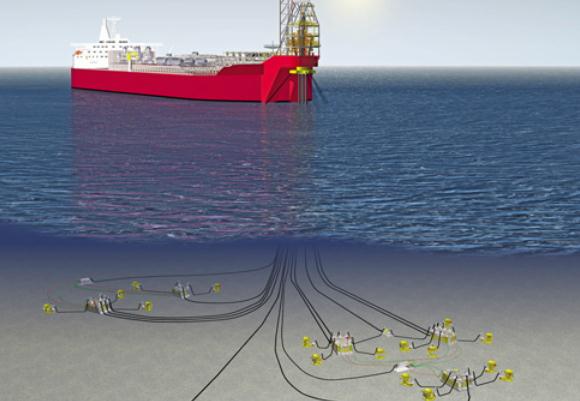
A new important milestone for Petrobras and its partners in the consortium that operates in the Libra block, in the Santos Basin pre-salt. The board of the National Petroleum Agency (ANP) approved the first development plan for the Mero field, which is located within the Libra area. In all, 65 wells will be drilled in the region and the investment forecast by Petrobras and other companies in the consortium will reach US$ 15.3 billion. The predicted oil recovery factor is 30%.
Of the total number of wells planned for the Mero field, 32 will be producers and 33 will be water and gas injectors (WAG). Mero will receive 4 definitive platforms. The FPSO Guanabara is expected to start operating in the area in March 2022. The FPSO Sepetiba is expected to start operating in the second quarter of 2023. Finally, the FPSO Marechal Duque de Caxias and the FPSO Mero 4 (still without a definitive name) will commence activity in Q2 2024 and Q2 2025, respectively.
The field will also feature the FPSO Pioneiro de Libra, used in the Early Production Systems (EPS), which should operate in the region until 2029. The last production of Mero was 24.5 thousand barrels of oil per day and 1.6 million m³ of gas per day in July 2021, when the period of the first EPS came to an end.
The ANP also gave the go-ahead for the Mero Production Individualization Agreement, as the deposit of the asset goes beyond the area surrounding the field (ring fence) to the North and South.
With the approval by the ANP, Petrobras will have until December 31 to detail the schedule for the implementation of HISEP equipment in each of the four modules in the field. As a reminder, HISEP is a new technology developed and patented by Petrobras so that, at the bottom of the sea, CO2 can be separated and reinjected from oil into reservoir rocks.
The operator will still have until December 31, 2022 to present the estimated cost of removing lines and equipment. Finally, the ANP required Petrobras to submit a report by December 31, 2025 with an updated assessment of the technical and economic feasibility of the scenarios for the exploitation of gas; and the forecast of the availability of the natural gas export infrastructure for the period between 2025 and 2035.
 Brazil Energy Insight
Leave a comment