Dec. 16, 2019
Reduction of state company’s presence in other regions creates resistance from workers and politicians
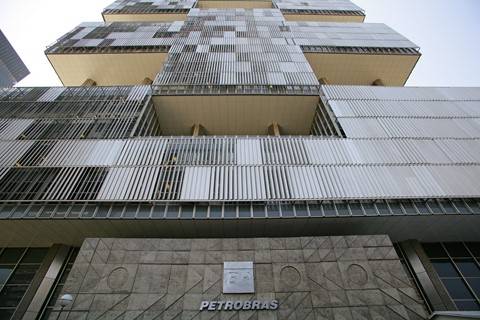
In a presentation to foreign investors last week, Petrobras pointed to its future on a map with assets only in the Southeast region and the possibility of investments in logistics to serve Southeast and Midwest, a major consumer of diesel oil.
“Petrobras will be a company that is well focused on deepwater exploration and production of oil and natural gas, geographically concentrated in southeastern Brazil, in three states: Espirito Santo, Rio de Janeiro and Sao Paulo,” the president of New York said. company, Roberto Castello Branco.
He stressed that the goal is to sell all its operations on land or shallow waters in other states, confirming fears of Northeast governors about the company’s departure from the region where the country’s oil industry was born.
The movement has already started with the opening of the divestment process in oil fields, refineries, fertilizer and biodiesel plants in the South, Northeast and North regions. Of the 205 exploratory fields or blocks offered for sale by the company since 2015, 145 (or 70.7%) are in the North and Northeast regions.
Cradle of Brazilian oil, Bahia tops the list, with 50. Then come Rio Grande do Norte (49) and Sergipe (27). The company is expected to maintain only deepwater operations in Sergipe, where it recently discovered large oil and gas reserves.
In this line, the state company has also decided to demobilize administrative buildings in northeastern capitals, such as Sergipe and Natal, and has created a transfer program to the states where it will maintain activities such as Rio, Sao Paulo and Espirito Santo.
The investment plan for the period 2020-2024 is U$ 20 billion to U$ 30 billion (R$ 82 billion to R$ 123 billion). The document foresees investments of U$ 75.7 billion (about R$ 310 billion), two thirds of this amount dedicated to pre-salt and another 8% in refining, or at least 75% directed to the Southeast.
“How are all the branches that Petrobras has [in these states]? Even those who are against her national presence cannot deny that Petrobras has roots. It can’t just uproot and get out, ”says leader of the Petrobras Parliamentary Defense Front, Senator Jean-Paul Prates (PT-RN).
Launched in May, the Front began this week a tour of northeastern states to seek support from the region’s governments against the company’s strategy. On Friday a study was presented on the impact of the process in Rio Grande do Norte. They have the support of the FUP (Single Federation of Oil Tankers), which fears the loss of jobs with Petrobras leaving the region. The company says it has offered part of its employees transfer to the headquarters in Rio, but not all should qualify.
The study presented to the governor of Rio Grande do Norte, Fatima Bezerra (PT), talks about reducing the number of workers in the sector, higher turnover and lower wages. Between 2015 and 2018, he says, the average salary of the oil and gas extraction segment in the Northeast fell 58%, to $ 2,677.27. In support activities to the oil industry, the fall was 17%, to $ 2,071.93.
The document also warns of the loss of the “propelling effect” of the state in attracting other companies to explore oil in the state.
Since the Michel Temer administration, the government’s energy department has argued that the departure of Petrobras may represent an increase in investments in other regions, as Petrobras has been reducing its contributions to smaller projects to prioritize the giant pre-salt fields.
Former Secretary of Oil and Gas of MME (Ministry of Mines and Energy) with Temer and Bolsonaro, Márcio Félix says that the movement opens space for the diversification of oil field operators in the country. According to him, companies that have been buying fields from the state-owned company should start investing soon.
“We are already on the brink of a turn around by 2020, it is becoming more noticeable,” says Félix, who is now executive secretary of the Sergipano Oil and Gas Forum. “There are already a large number of blocks [for oil exploration and production. ] in the hands of third parties. ”
In refining and fertilizer or biofuel factories, privatization advocates say, new entrants may justify investments in increasing production or logistics capacity in the region.
A study by Dieese (Inter-Union Department of Statistics and Economic Studies) estimates that the sale of refineries will impact the lives of 4,895 employees. Some of them will be reused by new buyers, but according to the FUP, they will first be fired before rehiring.
“What is being done today is a compulsory transfer program, ”says FUP director Deyvid Bacellar. “People are practically being compelled to relocate anywhere in Rio, Sao Paulo or Espirito Santo.”
Source: Folha de S.Paulo
 Brazil Energy Insight
Leave a comment