
4/16/2015 @ 3:56PM
For the 2018 Brazilian Election, Levy Might Just Be the Man Who Can Change the Game
Arthur Pinheiro Machado/Contributor/Forbes
For an outside observer, it is very difficult to understand Brazilian politics. There are about 32 parties; 21 currently support the government and 11 are in opposition. It is even more difficult to understand how a government that theoretically counts on the support of so many parties may be facing a lack of political support and strong opposition in the legislative branch, where the governing coalition parties are encouraging the people’s frustration.
In fact, President Dilma Rousseff’s current administration faces resistance from her own party and her governing coalition. Elected and reelected from the Workers’ Party (PT) with the support of former president Luis Inácio Lula da Silva in both elections, President Rousseff has distanced herself from her party. As a result, she finds resentment and obstruction from her party – a rarity in the political world. By isolating herself in the Palácio do Planalto and by choosing unpopular coalition members as political advisers, Ms. Rousseff not only created an abyss between herself and her mentor, the extremely popular former president Lula, but also created the preconditions for the erosion of her political support base. We can assert that Ms. Rousseff made three critical mistakes with one of them recurrent in the first and second presidential terms.
Mistake One: In the first term, she chose unpopular advisers with weak political relationships, particularly Mr. Arno Augustin Filho, who was responsible for the economic policy of the President’s first term and for certain economic undertakings of the country. This may have been Ms. Rousseff’s worst mistake, and she would not be in such a critical condition now if the economy had performed better. However, this mistake has been corrected with the choice of Joaquim Levy for Finance Minister in her second term.
Mistake Two: Ms. Rousseff distanced herself from the legislative power, particularly from the main allied party, the Brazilian Democratic Movement Party (PMDB). She used the legislative power as a necessary evil, ignoring the dissatisfaction warnings from both Congress and the Senate, trying to influence even the election for the presidency of the Chamber of Deputies.
Mistake Three: This is the most recent and, in my opinion, the most deadly mistake. Not only did Ms. Rousseff distance herself from her main ally Lula, but she also supported the organization of a new party, trying to use the electoral bureaucracy and ineffectiveness of Brazilian legislation to allow the birth of a competitor who could suppress the PMDB’s supremacy in the Congress and Senate. It is difficult to believe that this maneuver could go unnoticed.
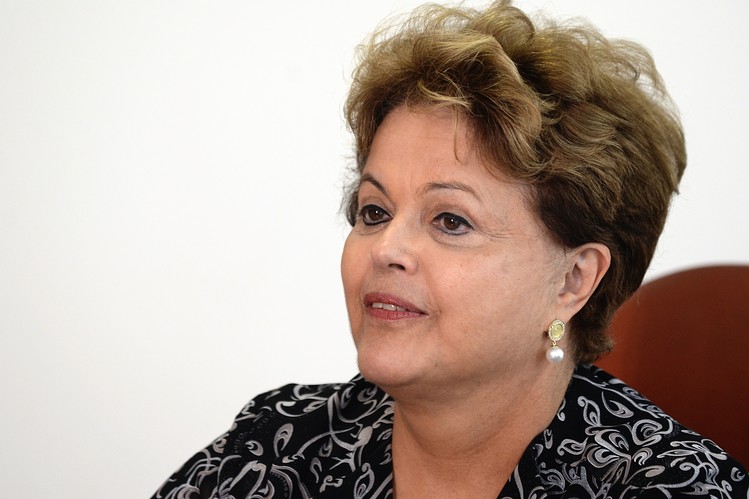
President Dilma Rousseff
Any reasons for mistakes two and three are outside the scope of this article. What is important here is that she placed two large bets, and lost both. The result is the following: the government party has no effective representation in the government, or its government coalition, and worse, both are under attack due to a huge corruption scandal that has the potential to jeopardize the future of the Workers’ Party. Without an executive power that can defend it, major cadres of the Party are migrating to other parties aiming at protecting their political future. Today, the PT’s sovereignty is highly threatened and its future is uncertain.
The PT’s main ally, the PMDB, controls both houses and has expressed its desire to launch a bid for presidency in 2018, already advancing an electoral run in the first 4 months of a new presidential term.
Even former president Lula, always a very strong ally and perhaps the only hope for the PT to turn the tide, is not a bullet-proof candidate since he has been constantly attacked by the press and is responsible for choosing Ms. Rousseff as the party’s candidate. In private talks, however, he has confessed his dissatisfaction with the government, despite his involvement.
The government party seems to be amid an endless political crisis, without a positive agenda and in a whirlpool of negative news that will spread until the end of President Rousseff’s term, so that hardly anything will remain of the PT in 2018. But in politics, scenarios change very fast and there are movements that can change the game.
For example, two weeks ago after a disastrous dismissal of the Minister of Education, Ms. Rousseff showed she has enough bad blood with her party not to replace the Minister of Education with a party-sponsored politician. Instead, she chose the extremely respected doctor Renato Janine Ribeiro, a technician with experience in the federal bureaucratic machine, to take over the Ministry. This was a positive surprise and one that sent her intended message. Ms. Rousseff wants to leave a legacy in education, as she signaled in her inauguration speech, saying that in these four years she wants to create a “country of education.” This will be one of Ms. Rousseff’s main programs over the next four years while she tries to get closer to the leaders of the PMDB.
These measures, although showing the resilience of the President, are still palliative. What can really be a game changer in favor of Ms. Rousseff and the PT would be the economic recovery of Brazil. The truth is that when the tax adjustment is approved, the country will face two years of economic squeeze and difficulties. But with the recovery of the U.S. economy, the world’s engine, Brazil can significantly improve its economy in the final two years of this presidential term. This can change everything, as we have already seen in 1994 and 2002.
However, placing her bets and political future on only this event is too risky for Ms. Rousseff and the PT. It is necessary to reduce the political tension now. Taking a cue from the series “House of Cards,” perhaps Ms. Rousseff and Lula can announce, on a reserved basis, that the PT will not submit a name for presidency, leaving the preference to the PMDB. Just like Frank Underwood’s maneuver, this announcement would not be sincere. But, even if it garners the PMDB’s mistrust, it could crucially lower the temperature in the base and grant the PT time to govern and implement its programs. In four years, the scenario could be ripe for another PT presidential victory. I am reminded of the story of the peasant sentenced to death who would be granted the King’s clemency if he could make his horse speak within one year. Whether the horse speaks is not the key, the point is gaining time.
However, the issue here is that the PMDB does not have a strong candidate for the presidency. Furthermore, it would depend on the PT’s support to win the election, since the support of the poorer classes and the PT’s strong militancy could decide the election. In this scenario, the PT would have to reinvent and adapt itself to survive and the PMDB would have to search for a sound name to assume the executive power. There is one man though, a name currently alien to the process, who could enable convergence: Brazil’s Finance Minister Joaquim Levy.
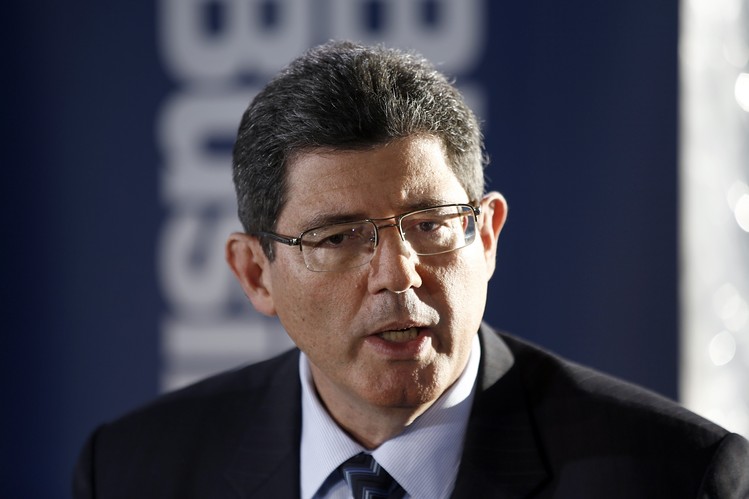
Finance Minister Joaquim Levy
Levy could be what Mr. Fernando Henrique Cardoso was for former president Itamar Franco. Depending on the economy and its adjustments, he could be the name that could reinvent the PT and the PMDB, divide the country’s right wingers and have the sympathies of the international market.
To preserve its existence and maybe another 16 years in power, the PT could reinvent itself and accept Levy as a solution. Today, he is not unanimously supported in the party, but he was not Ms. Rousseff’s preferred choice at first either and, in just four months, he seems to have overtaken the president. Alternatively, he could run for the PMDB with a vice-president from the PT.
To succeed, Levy would need the support of important cadres from the PMDB and of former president Lula. It would be an innovative and audacious move, one that unfortunately has little chance in today’s toxic political environment. But, if both parties realize that they may lose power, they may quickly lower their resistance. In politics, opportunity can create strange bedfellows.
Levy may be the right man at the right time for the country. He can unite the country in solving the political crisis. He may not show any interest today, but over the next four years he may reconsider his candidacy. What is ultimately important is that the country finds a way out of the political crisis in which it is currently entangled.
 Brazil Energy Insight
Leave a comment