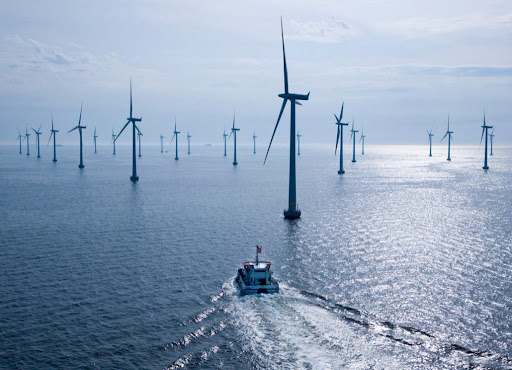
(OE) The United States’ Bureau of Ocean Energy Management (BOEM) approved the Construction and Operations Plan (COP) for Equinor’s Empire Wind project, marking another milestone in advancing the New York offshore wind project. With this permitting action by BOEM secured, Empire Wind is on track to begin construction in its federal lease area off the... Continue Reading →
Analysis: Readjustment seen in the US offshore wind sector
(OM) The start of 2024 marks a period where the “readjustment” of the US wind segment is becoming more apparent, according to recent analysis from market analysis firm Intelatus Global Partners. At a federal level, nearly nine gigawatts (GW) of lease potential in the Central Atlantic and Oregon have passed further hurdles to be auctioned... Continue Reading →
US Issues Clean Air Permit to Empire Offshore Wind Project
(Reuters) The U.S. Environmental Protection Agency (EPA) on Thursday, granted a Clean Air Act permit to New York's Empire Offshore Wind owned by Equinor. The permit was given after an air quality analysis showed federal air quality standards would not be compromised during construction and operation of the project, the agency said. "When built, this project is expected to generate... Continue Reading →
CIP Inks MoU for Floating Offshore Wind Structures in South Korea
(OW) Denmark-headquartered Copenhagen Infrastructure Partners (CIP) has signed a memorandum of understanding (MoU) with HSG Sungdong for the floating wind structures for its 1.5 GW Haewoori offshore wind project in South Korea. Under the non-binding MoU, the two companies plan to establish a partnership to explore opportunities to optimise the fabrication of floating foundations to... Continue Reading →
Coastal Virginia Offshore Wind Farm Gets Final Federal Blessing
(OE) Dominion Energy, the developer of Coastal Virginia Offshore Wind (CVOW) farm, has secured the last two major federal approvals needed to begin the construction of the 2.6 GW project. The approvals are keeping the largest offshore wind farm in the United States on schedule to generate clean, renewable energy to power up to 660,000... Continue Reading →
TotalEnergies and European Energy Strengthen Offshore Wind Ties
(OE) French energy major TotalEnergies has signed an agreement with European Energy to develop offshore wind projects in three Nordic countries, including Denmark, Finland and Sweden. The agreement covers 405 MW of offshore wind power under development in Denmark, and new large scale offshore wind projects to be developed jointly by TotalEnergies and European Energy... Continue Reading →
US Plugs in First Large Offshore Wind Farm as Developers Play Catch-up
(Reuters) The U.S. offshore wind industry reached an important milestone on January 2 when Vineyard Wind 1, the country’s first large scale project, supplied first power to the Massachusetts grid. “As the nation’s first utility-scale offshore wind farm this is a fairly momentous event,” Ken Kimmell, Chief Development Officer for Avangrid, the Iberdrola subsidiary co-developing the... Continue Reading →
US Publishes Draft Bill to Boost Offshore Wind
(OW) Rhode Island Senator Sheldon Whitehouse has released a draft version of a bill that would streamline the offshore wind development process and get new sources of affordable clean energy on the grid. Senator Whitehouse requests feedback on his bill from all stakeholders, including federal, state, and local agencies, industries, developers, and communities. The Senator... Continue Reading →
EU Adds 17GW of New Wind Energy in 2023
(OE) The European Union has built 17 GW of new wind energy in 2023, with 3 GW of new capacity coming from offshore wind farms. The WindEurope data shows that Germany built the most new wind capacity followed by the Netherlands and Sweden. The Netherlands built the most new offshore wind, including the 1.5 GW Hollandse... Continue Reading →
Rebuilding the Foundations of US Offshore Wind
Philip Lewis, Contributor (OE) As we enter a New Year, the memories of the shocks to the foundations to the U.S. offshore wind segment remain fresh. In short, supply chain inflation and capacity/availability, interest rate increases, and tax credit monetization have been the key themes highlighted by developers to explain why many projects became commercially unviable.... Continue Reading →