March 24 (oilprice.com) There is a persistent belief in energy debates that refuses to die: renewables and electrification are necessary, but expensive. It is often framed as an unavoidable trade off — clean energy comes at a premium, while fossil fuels remain the cheaper, more reliable baseline. That assumption is now being tested against reality. And reality is not being kind to it.
As gas prices climb again amid tensions around Iran and the Strait of Hormuz, Europe is seeing a familiar pattern: electricity prices surge in regions heavily exposed to gas, while remaining remarkably stable in others. The difference is not ideology or ambition. It is system design. And increasingly, it is exposing a simple truth. Electrification is not inherently expensive. Systems that remain tied to fossil fuel pricing are.
The Iberian Peninsula Tells a Different Story
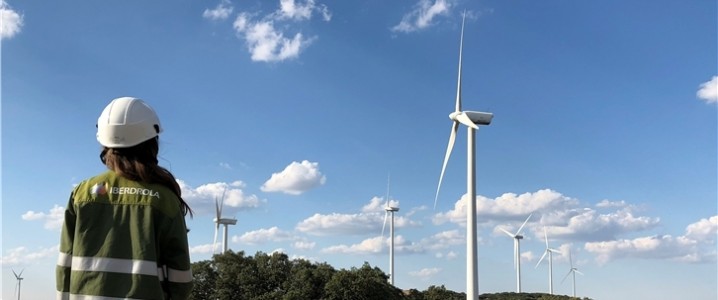
The clearest illustration comes from the Iberian Peninsula. Spain and Portugal have spent years expanding renewable generation — particularly wind and solar — while also operating with relatively limited interconnection to the rest of the European grid. This has created something of an “island effect,” where local market dynamics are less dominated by broader continental price signals.
A few clarifications are important here. In both Spain and Portugal, electricity prices are still determined by the Merit Order system, where the last unit cost of generation sets the wholesale price. Renewables — with near zero marginal costs — tend to lower average prices when they run, pushing out more expensive fossil generation. Day ahead wholesale prices on the Iberian market have typically averaged around €60–€70/MWh in recent years, reflecting strong renewable penetration but still influenced by gas price setting and occasional firming needs.
At the same time, the reduced demand for gas and the significant share of renewable capacity provide an additional strategic benefit: these systems are inherently more insulated from geopolitical shocks, helping stabilize prices even when global fuel markets are volatile.
The result is striking. At a time when gas driven price pressure is once again pushing electricity costs higher across much of Europe, wholesale power prices in Spain and Portugal have remained well below levels seen in countries more exposed to gas linked pricing. France, with its strong nuclear backbone and minimal reliance on fossil fuels for electricity, has seen similar stability.
In contrast, countries more exposed to gas linked pricing are facing significantly higher costs. Germany and Italy, for example, have recently seen wholesale prices well above €150/MWh, with similar patterns across parts of Central and Eastern Europe. This is not a temporary anomaly. It reflects a structural difference in how these systems are built and how prices are formed.
The Misunderstanding Around Cost
The common perception that renewables are expensive is rooted in a very specific context — one where fossil fuels still set the marginal price of electricity.
In such systems, even large volumes of low cost renewable generation do not necessarily translate into low prices. Instead, the market price is often determined by the last unit needed to meet demand, which is frequently gas fired generation. When gas prices rise, electricity prices rise with them, regardless of how much cheap wind or solar is already in the system.
This creates a misleading impression. It makes renewables appear costly when, in fact, they are simply operating within a pricing framework dominated by fossil fuels. What the Iberian example shows is what happens when that link is weakened.
Higher Renewables Integration Lowers Prices in Spain and Portugal
In Spain and Portugal, high renewable penetration combined with more limited exposure to continental gas driven price formation means that electricity prices are more often shaped by low cost generation.
When wind and solar dominate supply, prices reflect their economics rather than those of imported gas. The system does not become completely detached from global markets, but it becomes far less sensitive to them.
This is why prices can remain comparatively lower and relatively stable even when gas markets are volatile. It is not because renewables are subsidised into artificial competitiveness. It is because, once built, they produce electricity at very low marginal cost. The key shift is not technological. It is structural.
 Brazil Energy Insight
Leave a comment