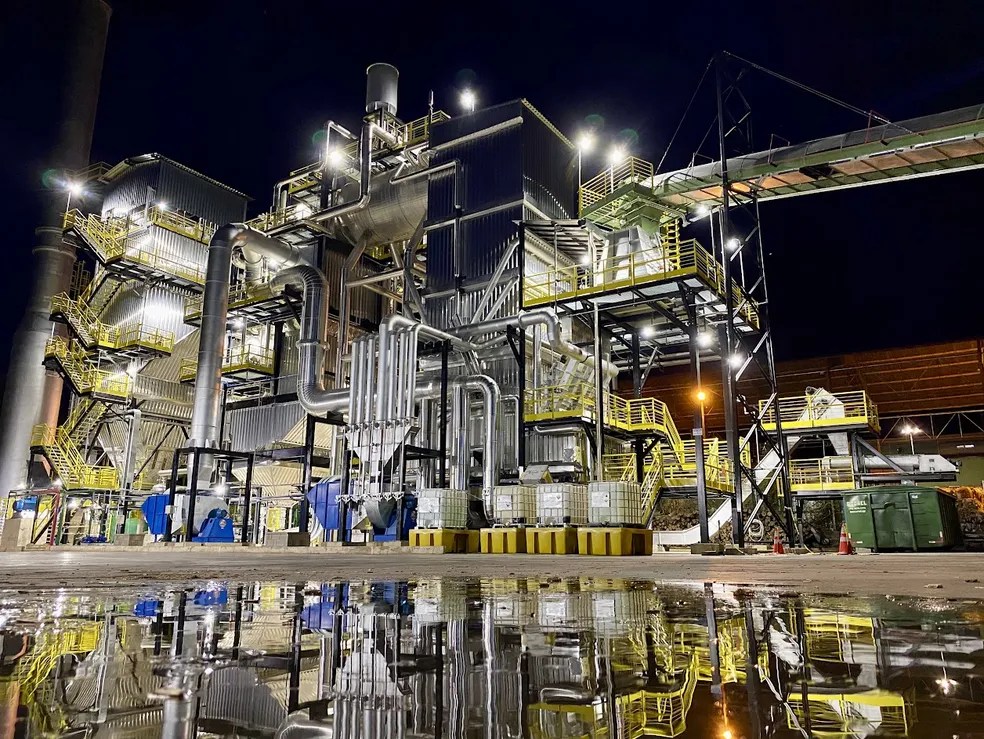
Dec 22 (Reuters) – ComBio, Brazil’s largest supplier of renewable thermal energy for industrial clients, expects to triple its revenue to about 2.4 billion reais ($430 million) within five years amid growing demand from corn ethanol producers, commercial director Ricardo Blandy told Reuters on Monday.
Some 25 corn ethanol plants operate in Brazil, where another 18 are under construction and 19 are in earlier planning phases, Blandy said, adding that biomass supply is tightening as biofuel output surges.
In states like Mato Grosso, Brazil’s top corn ethanol producer, biomass availability to feed steam boilers for producing the biofuel is a major challenge, surpassing corn supply and biofuel prices in importance, Blandy said.
“There are areas with a frightening biomass deficit,” he said.
Rapid growth of the corn ethanol industry and limited biomass supply for generating energy were among factors that led Mato Grosso state prosecutors to investigate whether some producers are illegally using deforested wood to feed their plants, a Reuters report found in October.
While ComBio already has 10 clients across several industries, it does not have any corn ethanol producers as clients yet, Blandy said, though he expects that to change soon.
“We’ve spoken with the 30 main producers or project developers in the ethanol space, and we are a few weeks from announcing our first contracts,” he said, without giving details.
ComBio wants to plant eucalyptus across about 10,000 hectares (24,711 acres) in Mato Grosso in the coming years to meet future biomass demand from corn ethanol producers, he added.
ComBio also offers renewable energy generation investments and handles the operation of the biomass-fired thermoelectric units, which can account for up to 30% of the investment in corn ethanol plants, which typically cost 1 billion to 1.5 billion reais to build.
He added that while industrial energy-generation projects may require 150 million to 300 million reais, the biological asset side can require up to another 300 million reais, depending on project size.
“We’re talking about 600 million reais in ComBio investment to ensure both industrial capex and forestry capex,” he said.
 Brazil Energy Insight
Leave a comment