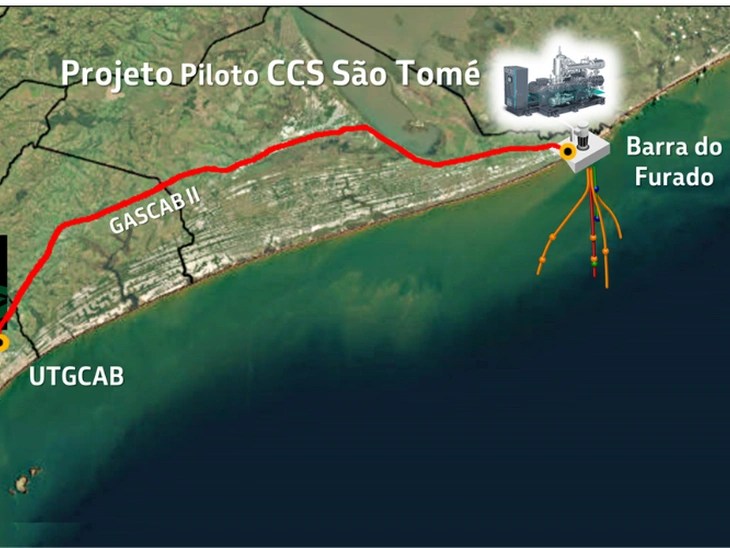
Sept. 18 (TN) Petrobras has approved the construction of the São Tomé CCS Pilot Project in Macaé, Rio de Janeiro, a strategic initiative to achieve the carbon neutrality goal by 2050. This is the first CCS (Carbon Capture and Storage) pilot project in Brazil, with infrastructure that allows for the complete integration of CO₂ capture, transportation, and geological storage in a saline reservoir. The project, which is being monitored by regulatory and environmental agencies such as the National Agency of Petroleum, Natural Gas, and Biofuels (ANP) and the State Environmental Institute (INEA), is considered a milestone for technological and regulatory advancement for Carbon Capture, Utilization, and Storage (CCUS) projects in Brazil.
“The company’s tradition of employing cutting-edge technology to enable large offshore projects is also being applied to decarbonization initiatives. This initiative is another concrete step by Petrobras in building effective climate solutions,” emphasizes Angélica Laureano, Petrobras’ Director of Energy Transition and Sustainability.
The goal of the São Tomé CCS is to capture up to 100,000 tons of CO₂ per year, over three years starting in 2028, and inject it into a deep saline reservoir in the Barra do Furado region of Quissamã, Rio de Janeiro. As the first project of its kind in a saline reservoir in the country, the São Tomé CCS will allow agencies such as the ANP and INEA to test, adjust, and validate procedures and standards applicable to the CCS value chain, representing a regulatory advance regarding the geological storage of carbon in future commercial projects.
“The CCS São Tomé Pilot Project is a strategic Research, Development, and Innovation (RD&I) initiative that will enable the validation, in a real-world environment, of fundamental technologies and methodologies for the implementation of carbon capture and storage (CCS) hubs in Brazil. The technologies applied allow us to monitor the evolution of the CO₂ plume with unprecedented precision in the country, and the information obtained from the project may point us to new uses for CO₂, such as the production of synthetic fuel,” explains Renata Baruzzi, Director of Engineering, Technology, and Innovation at Petrobras.
The initiative is considered a learning and technological qualification platform for future commercial CCS projects and hubs in Brazil, both onshore and offshore. CCS São Tomé also positions Brazil among the countries leading the development of large-scale emissions mitigation solutions, aligning with international best practices and paving the way for future commercial CCS applications in various sectors of the economy.
 Brazil Energy Insight
Leave a comment