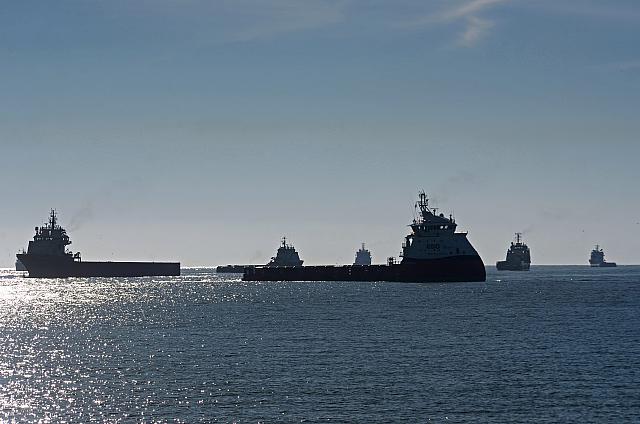
(CPG) With new contracts, billion-dollar investments and overcoming a crisis that almost paralyzed the sector, Brazilian companies are ready for a new cycle of growth.
The Brazilian maritime support segment has suffered a drastic decline in recent years. In 2014, more than 500 vessels were active in the country, but in 2019, that number fell to 230 due to a prolonged crisis in demand. However, since then, the recovery has been steady. Today, the fleet is close to 450 vessels, with optimistic forecasts to reach 500 units by the end of 2024.
Recovery supported by strategic investments
This recovery was driven by investments of more than US$ 10 billion through the Merchant Navy Fund (FMM), which allowed the modernization and expansion of the Brazilian maritime support fleet. With this, Brazil now has the sixth largest national-flagged fleet in the world, consisting of sophisticated vessels capable of operating in both shallow and ultra-deep waters.
Petrobras leads the resumption of bidding processes
One of the key factors for growth was the resumption of bidding processes by Petrobras. Earlier this year, the company launched a bidding process for the construction and contracting of 12 PSVs (Platform Supply Vessels), requiring 40% local content, with contracts of up to 12 years. This new bidding cycle is similar to the old Prorefam (Offshore Support Fleet Renewal Program), which helped the sector overcome the previous crisis.
Emerging challenges in the offshore support industry
Despite the optimistic scenario, the sector faces some crucial challenges that may impact its ability to grow in the long term.
Lack of qualified labor
One of the main problems faced by offshore support companies is the shortage of qualified professionals to operate the vessels. The demand for highly qualified crew members is not keeping pace with the fleet’s growth. In addition, the lack of ongoing and permanent training worsens the problem.
Navy action:
The Brazilian Navy has already begun to increase the number of vacancies in Officer Training Schools (EFOMM), aiming to meet the growing demand. Shipping companies also suggest resuming short courses for recertification and training of new professionals.
Impact of tax reform
Another point of concern for the sector is the proposed regulation of the Tax Reform (PLP 68/2024), which is currently being processed in the Senate. According to Syndarma/Abeam, it is vital to ensure that the competitiveness of the Brazilian flag is preserved, mainly by maintaining the incentives of the Brazilian Special Registry (REB), a fundamental device for promoting the construction of vessels in Brazil.
Proposals under Debate:
The sector obtained a partial victory in the Senate, with the inclusion of amendments that seek to protect the tax incentives for support navigation. However, these amendments still need to be definitively approved by the Legislature.
Expectations of billion-dollar investments
The Brazilian offshore support market is also keeping an eye on Petrobras’ expansion plans. The state-owned company is projecting investments of US$2.5 billion by 2030, with the contracting of up to 38 offshore support vessels, including PSVs, OSRVs (Oil Spill Response Vessels) and RSVs (Remote Subsea Vehicles). These new contracts should further strengthen the sector and generate new opportunities for Brazilian shipping companies.
Projections for expansion of offshore production
In addition to Petrobras’ investments, offshore oil production in Brazil is expected to grow significantly in the coming years. Production is estimated to reach 5.4 million barrels of oil equivalent per day by 2029, generating an even greater demand for offshore support vessels.
The strategic importance of offshore support for Brazil
The offshore support sector is essential to the Brazilian economy, especially for the offshore oil and gas industry. According to data from Syndarma/Abeam, 97% of Brazil’s oil and gas production occurs in offshore fields, making support vessels a vital link in the production chain.
Share of the national fleet in numbers
In July 2024, the fleet of support vessels in Brazilian jurisdictional waters totaled 448 units, of which 84% were nationally flagged. This percentage has increased in recent years, driven by the greater demand for support vessels and the conversion of foreign vessels to the Brazilian flag.
Fleet Breakdown: Almost half of the fleet (47%) is made up of PSVs and OSRVs, while AHTS (Anchor Handling Tug Supply Vessels) represent 14% and FSVs (Fast Supply Vessels) and crew boats total 27 vessels.
Main companies in the sector and their strategies
Among the main offshore support companies operating in Brazil, Bram Offshore/Alfanave, part of the American group Edison Chouest, continues to lead the market, with 75 vessels in operation or awaiting contracting. CBO and Wilson Sons Ultratug also stand out, each with a significant fleet under the Brazilian flag.
CBO expansion and future strategies
CBO has reaped the rewards of a planned expansion over the past five years, which has allowed the company to increase its fleet from 32 to 45 vessels. The strategy included the purchase of vessels already available on the market, taking advantage of idleness during the crisis. With this expansion, the company now ranks as the second largest in Brazil and one of the 10 largest in the world in the offshore support segment.
Camorim’s investments
Camorim is also optimistic about the future of the market. In the last 12 months, the company has added five new vessels to its fleet, including two LHs (Line Handlers) and three large vessels. In addition, the company is investing R$200 million in the construction of five azimuth tugboats, aiming to expand its presence in the port and offshore sector.
Future potential of the offshore support market
With the growing demand for oil and gas, the offshore support market in Brazil has a positive projection for the coming years. In addition, there is potential for new business in the offshore wind energy sector, which should represent a new frontier for offshore support in the country.
Opportunities in the offshore wind energy sector
The exploration of offshore wind energy in Brazil is still in its early stages, but it is already seen as a promising opportunity for the offshore support sector. As new offshore wind farm projects gain momentum, demand for specialized vessels is expected to increase, creating yet another growth opportunity for Brazilian companies.
The offshore support sector in Brazil is experiencing significant expansion, with the fleet expected to reach 500 vessels by the end of 2024. With billion-dollar investments from Petrobras and the resumption of bidding processes, the market appears to be on a trajectory of continued growth. However, issues such as the lack of skilled labor and the impacts of tax reform still represent challenges that need to be addressed to ensure the sustainability of this growth.
 Brazil Energy Insight
Leave a comment