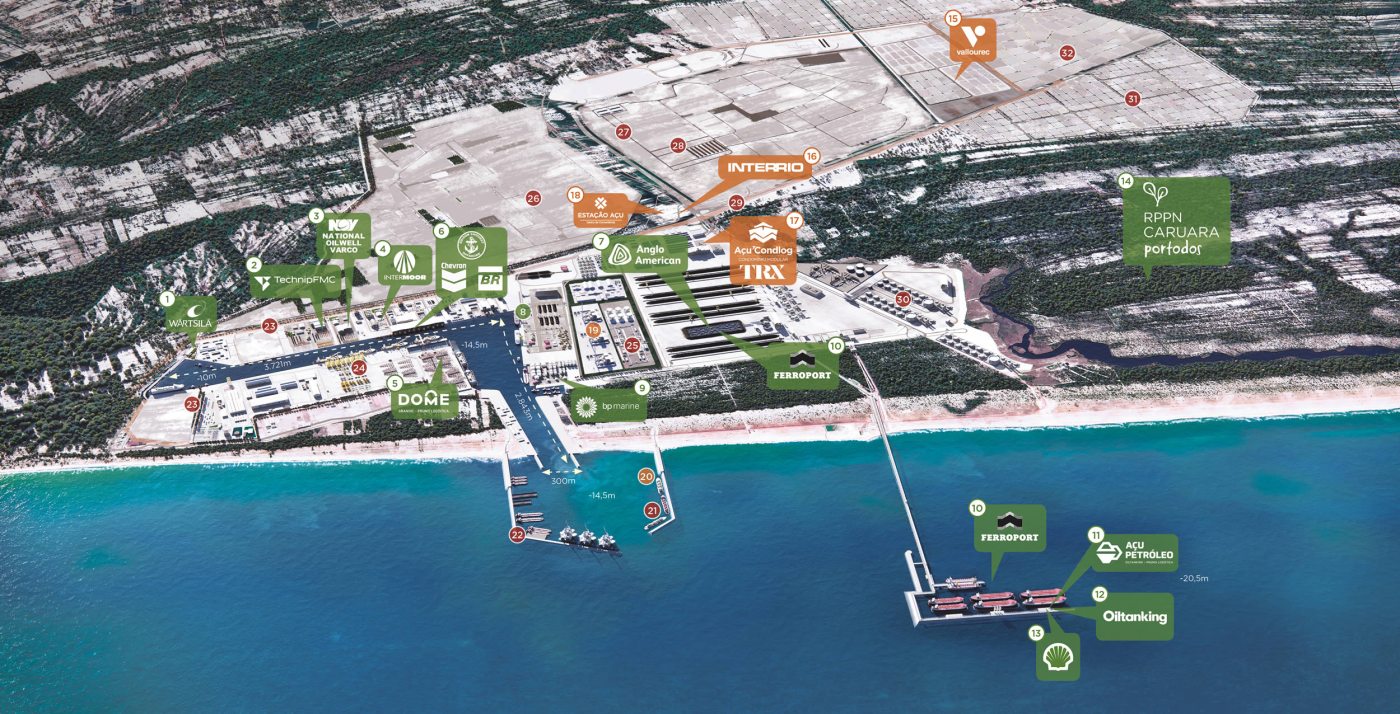
(epbr) The Port of Açu, located in the north of Rio de Janeiro (RJ) and controlled by Prumo Logística, announced the closing of the first contract to reserve an area for the hydrogen hub of the Port of Açu.
The agreement was signed with the Norwegian company Fuella, specialized in the development and operation of hydrogen and green ammonia plants.
According to Rogério Zampronha, CEO of Prumo Logística, the company plans to build a green ammonia plant with a capacity of 520 MW, using the electrolysis process.
The unit will have the potential to produce 400 thousand tons of green ammonia per year, which will be stored and transported through the Açu Liquid Terminal (TLA), with a focus on export.
Fuella has Allianz, one of the largest insurance companies in the world, as one of its shareholders.
The company has been working to identify ideal green ammonia production sites that combine access to renewable electricity, robust grid capacities, and transportation routes.
Decarbonizing the industry
Prumo’s CEO highlighted the importance of this project for industrial sectors that face challenges in reducing their carbon emissions, known as “hard-to-abate.”
Priority sectors include the steel industry, the fertilizer chain, and the production of clean fuels such as methanol and SAF (sustainable aviation fuel).
“These hard-to-abate segments will inexorably require specific solutions such as the use of low-carbon hydrogen,” said Zampronha during a company event in São Paulo.
The Port of Açu had recently obtained the environmental license to install the low-carbon hydrogen hub in an area of 1 million square meters, which was a crucial step in making the project viable.
Furthermore, in June of this year, Prumo signed a memorandum of understanding with Eletrobras to assess the feasibility of renewable hydrogen production projects and its derivatives.
This agreement covers not only the technical, environmental and financial feasibility of the plant, but also the possibility of using resources for research and development or public and private financing that encourage related projects.
 Brazil Energy Insight
Leave a comment