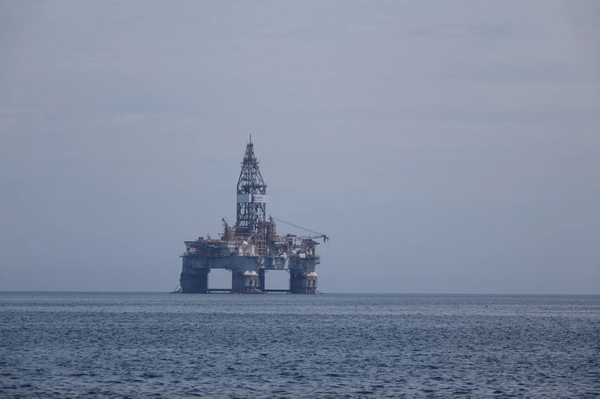
(PN) Petrobras intends to save up to US$100 million annually by partially automating its fleet of drilling rigs by 2030. The objective is to reduce the average drilling time of offshore wells, bringing financial, safety and environmental benefits. By optimizing the use of rigs in well drilling, automation could reduce, after 2030, around 30 thousand tons of CO2 per year. The implementation of automation will be carried out gradually and planned, in the next hiring cycles. Although the technology for autonomous rig systems (automatic drilling) already exists, its use in Brazil is limited and does not fully meet Petrobras’ needs. To improve the solutions available, the company participates in national and international research groups. In addition, it is already conducting a pilot project on two pre-salt probes, expected to be completed by the end of the first half of 2025.
“It’s like an autonomous car”, says consultant André Fernandes, from Poços Management, the area in charge of the studies. “Instead of starting the vehicle and taking control, worrying about traffic laws and obstacles, the user selects their destination and lets the car carry out other functions”, he added. Automatic drilling is carried out through applications integrated into the rig’s various drilling equipment. Instead of employees executing dozens of commands for repetitive activities, a single operator initiates a sequence of commands and supervises the process. Furthermore, it is possible to implement machine learning directly in the construction of wells through a “digital gateway”.
In addition to reducing costs, automatic probes have the potential to increase revenue by accelerating the production schedule, although this advancement is subject to variables such as the construction of the production unit and the installation of the subsea layout. Automatic drilling will also contribute to safety by minimizing worker exposure to the so-called “red zone”, the highest risk drilling area.
After years of continuous reduction in the average well drilling time, the company is seeing smaller gains given the limits of current technology. “The implementation of autonomous systems is the way of the future, as we seek gains while maintaining structure, security and the recovery factor with broad potential for evolution”, concluded André Fernandes.
 Brazil Energy Insight
Leave a comment