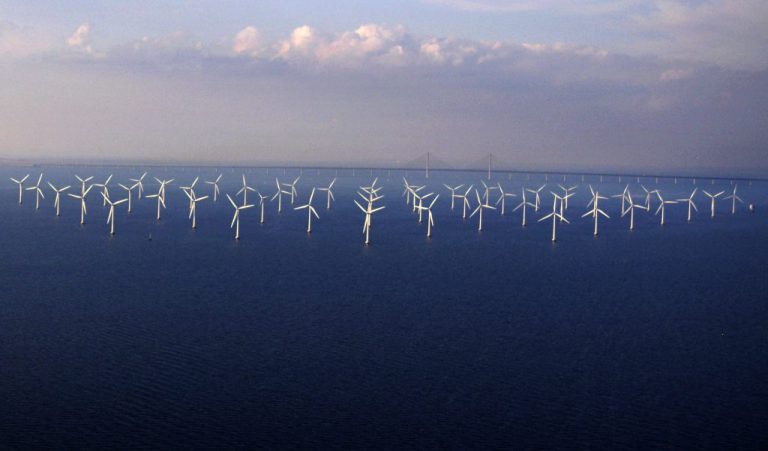
(PN) One of the challenges for implementing offshore wind farms in Brazil is defining the technology for transporting energy generated at sea to the continent. With this in mind, the Center for Research and Innovation in Greenhouse Gases (RCGI) began carrying out studies to understand the best technology for transmitting energy and, at the same time, defining the most appropriate way of supplying electricity to oil and gas platforms installed in Brazilian waters. The research is being financed by the French company TotalEnergies, which is fully interested in the issue, as in addition to producing oil and gas in Brazil, it also has plans to install offshore wind farms on the country’s coast. Twenty researchers – including professors, post-doctoral students, doctoral students, master’s students and undergraduate students – will work over three years to create tools capable of helping to choose the most appropriate technology for energy transmission in each case.
“The project has two distinct objectives, which share a common element: the transmission of energy through the sea. The first involves bringing energy to the coast from offshore wind farms. The other will take energy from the coast to the oil and gas exploration platforms”, says electrical engineer Renato Machado Monaro, professor at the Polytechnic School of the University of São Paulo (Poli-USP) and coordinator of the project “Investigation of transmission technologies offshore on the Brazilian coast applied in oil and gas exploration and in the integration of wind farms (TransBRcoast)”.
Monaro states that the two aspects have different characteristics. “Offshore wind farms will be built close to the coast; The projects foresee distances of up to 20, 30 kilometers from the coast, most of them still on the continental shelf, where the water depth is shallower. Oil platforms are installed where the oil is,” explained the researcher.
Brazilian platforms intended for oil and gas exploration are, on average, located at a distance of 148 kilometers from the coast, with the furthest located 300 kilometers from the coast, in the Santos basin, in deep or ultra-deep water areas. On these platforms, the energy consumed comes from the gas extracted from exploration wells. Currently, these platforms operate as isolated systems, however, the intention is to reduce carbon emissions during oil extraction as much as possible. “With the electrification of platforms, we reduce our dependence on oil, we will emit less CO2 in this exploration”, says Monaro. “Maybe in our lifetime, we will see a society with a lot less oil, but I don’t think it will disappear,” he added.
In the first stage of the studies, the RCGI will survey the technological limits, the costs of systems and materials already used in other countries, such as transmission cables, transformers, converters, among others, and future perspectives. In addition, researchers will also evaluate the generation capacity of the planned wind farms and how much energy they should produce, in addition to studying the amount of energy consumed by current platforms. The project’s final report will be delivered to the National Petroleum Agency (ANP) and will be public.
To connect an offshore wind farm to the coast or to integrate the grid with platforms, three different technologies will be investigated. “Each of them has its own particularities and costs. After certain distances, one technology begins to prevail over the other”, says the RCGI project coordinator. High voltage alternating current (HVAC) transmission, at a conventional frequency (50/60 Hz), corresponds to the most technologically mature configuration, according to the researchers. The maximum transmission distance, however, is limited to around 50 kilometers from the coast.
An alternative is to reduce the frequency, which reduces energy transmission losses and, consequently, increases the transferred power. Known as LFAC (Low Frequency Alternating Current), this technology consists of transmitting alternating current at high voltage with one third of the conventional frequency (16.67/20 Hz). In this case, it is necessary to install an AC/AC power converter on the coast in order to change the transmission frequency before connecting the offshore system to the onshore electrical grid. Although studies in the technical literature point to LFAC technology as suitable for transmission over intermediate distances (between 30 and 75 km), in practice it has only been applied to date in railway systems in Europe, warns the RCGI team.
TotalEnergies’ support for the RCGI project is part of a series of company investments dedicated to research and development. “We believe in the value of the knowledge generated by universities and we want to be actors in bringing industry closer to academia. And we are excited about this partnership because we see the importance of R&D work for TotalEnergies’ leading role in the energy transition. Currently, around 50% of TotalEnergies’ RD&I projects in Brazil are focused on the new energy and emissions reduction segment”, says Isabel Waclawek, director of Research and Development at TotalEnergies in the country. In total, the French company has 12.1 GW in installed capacity of offshore wind projects under licensing in Brazil.
Source PetroNoticias: https://petronoticias.com.br/centro-de-pesquisa-rcgi-estuda-tecnologias-para-interligar-parques-eolicos-offshore-no-brasil-a-rede-eletrica/
 Brazil Energy Insight
Leave a comment