By Julia Borges da Mota Partner at Murayama, Affonso Ferreira e Mota Advogados.
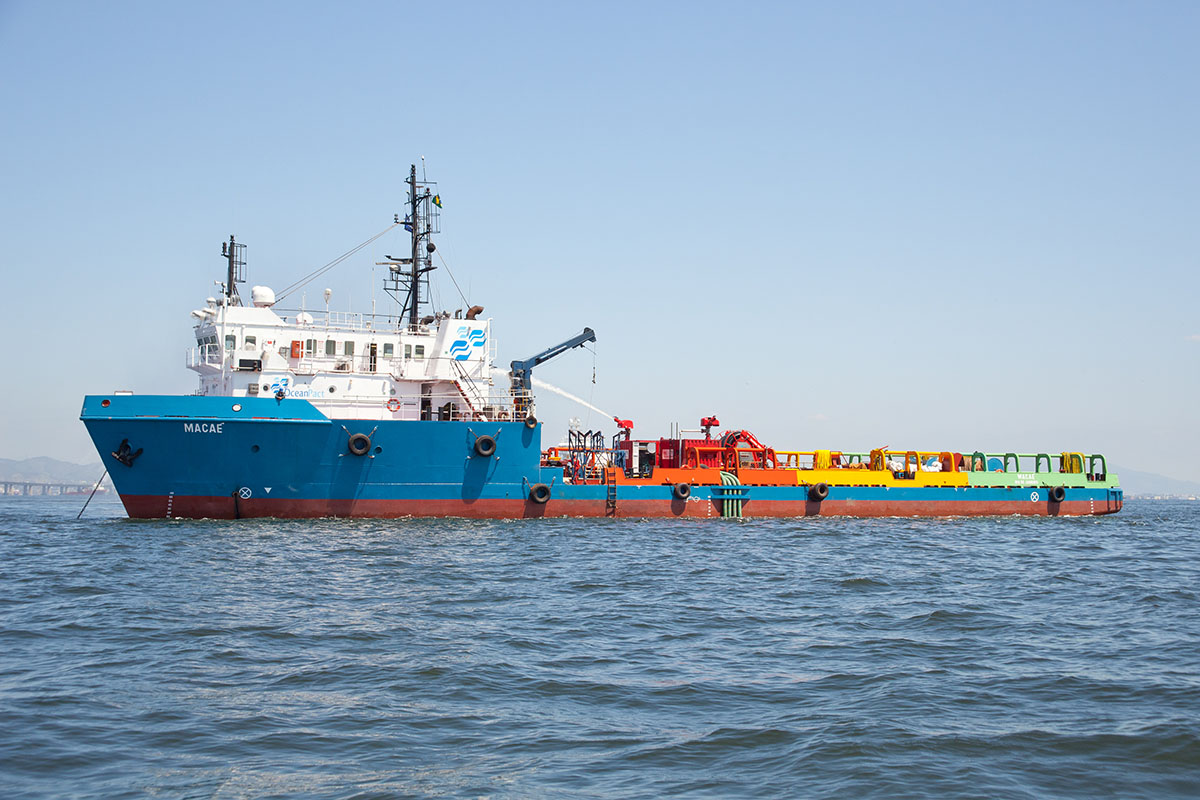
(TN) On October 10th, the deadline for submitting proposals in a large-scale tender promoted by Petrobras ends. This tender focuses on the charter of up to 12 OSRV type vessels, all Brazilian flag. The charter process will follow the modality known as “time charter party”, where the chartering party provides the vessel properly equipped and with a crew.
These vessels will be destined to operate in Brazilian waters, in accordance with the Concession, Onerous Assignment or Production Sharing Agreements, established by Petrobras with the National Petroleum, Gas and Biofuels Agency (ANP) or, in certain cases, with the Union. This bidding process is of great importance and complexity, considering the need to meet the legal and regulatory requirements that govern the oil and gas industry in Brazil.
Evaluation of proposals will be based on the selection of the lowest total price, taking into account the daily charter rate offered against a reference budget, with the daily rate set at US$31,883.33. With contracts expected to last 4 years for the 12 vessels, the initial estimate of the total value of the contract exceeds the figure of R$2.7 billion (each vessel totals the value of US$46,549,661.80 for the 4 years, which results in a total amount of US$558,595,941.60, that is, approximately R$2,737,120,113.84).
It is important to highlight that participation in this tender is restricted to Brazilian companies, or foreign companies that are duly authorized to operate in Brazilian territory, as provided for in article 1,134 and subsequent ones of the Civil Code. This means that interested foreign companies must have an operating authorization issued by the Federal Government, in accordance with the terms established in DREI Normative Instruction No. 7, of December 5, 2013.
Furthermore, bidding is restricted to suppliers who have previously qualified, as established in Law 13,303/16, which governs bidding procedures for state-owned companies. The Pre-Qualification process began in February this year, and only companies that went through this process are authorized to participate in the bidding, in strict accordance with Article 64, § 2 of the aforementioned Law.
According to the Petrobras Bidding Regulation, in its Article 52, § 1, item I, companies whose pre-qualification request has been approved or at least submitted by the date specified in the notice may participate in a restricted bid. published prior to the bidding.
In the qualification phase, the winning bidder must prove that it has a net worth equal to or greater than 10% of the value of the price proposal, in addition to meeting other accounting and economic-financial requirements. If it is not possible to fulfill this condition, the company has the option of presenting a Corporate Guarantee (PCG – Parent Company Guarantee) from a company belonging to the same economic group.
Therefore, participating companies, when preparing their proposals, must be fully aware of the qualification requirements to guarantee their qualification in the Petrobras tender.
The contractual drafts follow the standard model established by Petrobras, with some exceptions. It maintains, for example, the right to deduct fines of any nature from payments owed to the contractor. This represents a substantial risk, since the possibilities for imposing fines are varied and are detailed in the respective contractual clause.
Furthermore, the termination clause establishes limitations for unilateral termination by the charterer, which is only permitted in cases of suspension of the execution of the contract for more than 120 days, delay in payments of more than 90 days and imbalance in the economic-financial equation of the contract. These are the only acceptable justifications for termination, which constitutes another risk factor for the charterer.
It is worth highlighting the innovative provision of the “Knock for Knock” liability clause. This clause’s main objective is to limit the liability of the parties involved, that is, each of them assumes responsibility for their own equipment and employees, regardless of the agent causing any damage. This clause is widely adopted in the oil and gas industry and reflects the imperative need to allocate risks arising from possible losses resulting from accidents in offshore oil and gas operations.
These contractual provisions relating to the allocation of responsibility require a thorough and cautious analysis by bidders, given the significant implications for business risks and the need to take out insurance. It is essential that bidders are fully aware of these clauses and understand their possible effects before deciding to submit a bid and participate in the bidding.
Another highly relevant innovation is the introduction of arbitration as a means of resolving conflicts, subject to the Arbitration Regulations of the Brazilian Center for Mediation and Arbitration (CBMA), establishing the arbitration headquarters in Rio de Janeiro.
Finally, it is important to note that, although Petrobras’ contracts are subject to Law 13,303/16 and follow private law precepts, they include clauses typical of public contracts, such as the “Administrative Sanctions Clause”. This clause grants Petrobras the prerogative, in addition to applying contractual fines, to impose warnings, administrative fines, temporary suspensions of participation in tenders and impediments to contracting with Petrobras. This aspect adds another element of risk to be considered by companies interested in presenting their proposals.
As mentioned above, given the financial magnitude of the contracts that will result from this bidding process, it is essential that the Notice be analyzed very carefully, from a legal, technical and economic point of view, and the contractual terms and conditions subjected to rigorous scrutiny by of bidders.
 Brazil Energy Insight
Leave a comment