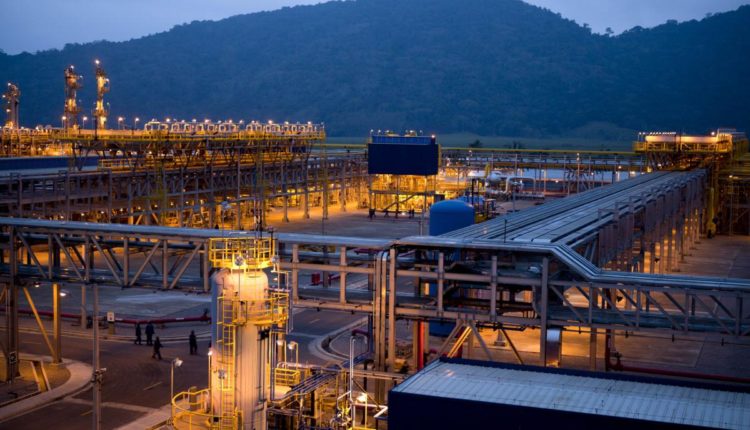
The decisions of Petrobras management, led by the current president Roberto Castello Branco, look like aimless ship. The biggest example of this was the cancellation of the tender, announced on Friday night , 25 days before the submission of proposals. The company decided to stop the development of the infrastructure adaptation project of the Monteiro Lobato Gas Treatment Unit (UTGCA), in Caraguatatuba, on the north coast of São Paulo, 9 months and 26 days after the launch of the tender. The announcement of the cancellation was laconic, with inconsistent justifications. What is known in the market is that the company decided to inject more gas in the Campo de Búzios and therefore would not have enough gas to operate the new unit.
Petrobras has changed in some ways, but the old arrogance and pomposity have remained firm pillars of the company. Nothing was taken into account when making such a decision. No respect for the market. The work of hundreds of professionals, engineers, technicians, from the various companies involved in the study, preparation of proposals, the investment of the companies in a terrible year, after six years of Lava Jato operation, which almost completely destroyed Brazilian engineering. There was no sensitivity. The damage to companies that believed in the public notice, in the word of the state-owned company, is enormous.
According to the statement to the market, “The decision was made due to the loss of the project’s economic attractiveness, evaluated in the light of the premises of the Strategic Plan 2021-2025.” In addition, the state company decided to cancel the associated bids that would serve the project. “Petrobras reinforces its commitment to generating value from its portfolio and its strategy.” It is worth mentioning that in its Strategic Plan for the period from 2021 to 2025, released last week, the company also highlighted its intention to eliminate the performance gap that separates it from international oil and gas competitors.
To remember, the Monteiro Lobato Gas Treatment Unit (UTGCA) is located in the city of Caraguatatuba in São Paulo and has the capacity to process up to 20 million m³ of natural gas daily, coming from several platforms, connected to the Mexilhão Platform (PMXL-1), installed about 140 kilometers from the coast. From there, the product reaches UTGCA via a gas pipeline. The gas processed at UTGCA gives rise to three products: natural gas, which has industrial, residential and vehicular use. LPG (liquefied petroleum gas or cooking gas); and C5 + (condensed), liquid part of the gas. After processing at UTGCA, another gas pipeline, Gastau, takes natural gas to the city of Taubaté (SP), where it is launched into Petrobras’ gas pipeline network, then for distribution. The C5 + goes on trailers to the Henrique Lage Refinery (Revap) in São José dos Campos (SP). Since December 2015, LPG has been sent to São José dos Campos through the Caraguatatuba-Vale do Paraíba oil pipeline (Ocvap I). And Ocvap II exports C5 + through a pipeline.
Indignation is circulating in the market, leaving companies that were in the process perplexed and without understanding the reasons. There was no planning and studies to decide to do the work? Were the planning and study not valid? The situation is similar to some other cases, such as the construction of the Parque das Baleias gas pipeline, in Espírito Santo. After opening the proposals and electing a winner, Petrobras turned its back and simply canceled everything. The investments made by the more than 30 companies that participated in the bidding were thrown away. Money down the drain. Embarrassment by incompetence? None. In the case of UTGCA, how much was spent by companies analyzing, engineering, budgeting and moving other partners? Soon a huge chain was created. International companies are involved in preparing the proposals. Professionals traveling to Brazil from South Africa, Houston, Dubai, England, Spain, Portugal. International companies using all resources, including hiring Brazilian engineering with all its scope. Lawyers, translators, search for financing, logistics etc.
Petrobrás recently distributed a long questionnaire to its registered suppliers to find out if their supplier companies were compliant. The questions forced companies to strip, make private disclosures, creating a unique constraint. These companies, of any size, need to invest in order to have this certification. If not, they will be removed from Petrobras’ register. Basically, the state-owned company is strengthening the niche of a new business in Brazil, that of compliance certifications. And consolidating an old attitude of the company in the market: “Do what I say, don’t do what I do.” The attitude that the company took when canceling a bid after almost ten months of launching, certainly cannot meet its own compliance. A huge disrespect with its partner companies.
Source: PetroNoticias
 Brazil Energy Insight
Leave a comment