Sept 27, 2019
Antaq held a public hearing to discuss the normative instruction that will discipline the criteria for analysis of the requests for circularization of vessels specialized in engineering works.
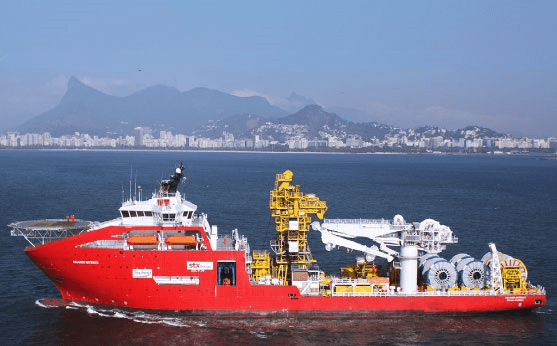
The draft prepared by the agency provides that the circularization of vessels as PLSVs (specialized in the installation of flexible ducts) may be started two years in advance of the operation, against the current limit of six months, and that its Certificate of Chartering Authorization (CAA) will be extended from one to two years.
Circularization is the mandatory process whereby one identifies whether there are Brazilian flagged vessels available to meet a given contract. If so, the Brazil flagged unit blocks any intended foreigners; otherwise, Antaq assures a CAA to the latter.
The changes meet requests from oil companies. In a presentation to Antaq, Petrobras explained that, in order to have time to adapt the vessels before service, they usually hire them two years in advance. According to the company, the occurrence of a blockage missing six months or less for the operation causes delays and high costs for the retrofitting of the project.
But the claim by the state-owned company and other IOCs, through the IBP – with Subsea 7 support – goes further: for these companies, the ideal was that submarine engineering vessels should not be classified as maritime support navigation units, exempt from the CAA requirement, as with drillships and platforms.
One of the arguments is that this has the potential to increase labor costs. Once part of the maritime support, engineering vessels are subject to higher proportions of Brazilian professionals, as provided for by a resolution of the Ministry of Labor and Employment (MTE).
“Petrobras pointed out great difficulties in meeting these requirements, given the scarcity of Brazilian professionals specialized for this activity, which, consequently, added to the fact that foreign professionals have less labor rights, contributes to the increase of the workforce” , reported Antaq’s regulatory expert, Henrique de Assis Serra, in a form for proposing a normative act.
His recommendation, however, was to frame underwater engineering vessels as maritime support – as it is today, but by adopting criteria to avoid conflicting interpretations of this nature. Serra also suggested changing the terms of circularization for its chartering.
Another agency expert, Fabiane Santos de Mello, recommended improving the procedures and criteria for analyzing circularization requests, requiring the applicant to indicate the intended activity and its particularities in order to solve the problem of specialized vessels that do not have featured navigation.
Begun on August 29, Antaq’s public consultation is scheduled to end October 14.
Brazil Fleet
According to the latest data from the Brazilian Association of Maritime Support Companies (Abeam), there are 17 PLSVs in the country. Among them, 15 are hired by Petrobras: five from Sapura Navigation, four from Subsea 7, four from the TechnipFMC-DOF consortium and two from JV TechnipFMC-Ocyan.
In the group chartered by the state oil company, only three fly the Brazilian flag: Sapura Esmeralda, from Sapura, and Skandi Recife and Olinda, from TechnipFMC-DOF.
Source: Brasil Energia Magazine
 Brazil Energy Insight
Leave a comment