
Offshore Drillers’ Problem: Few Oil Firms Need Their Rigs
BP, others try to get out of rig-leasing deals to cut costs amid low oil prices
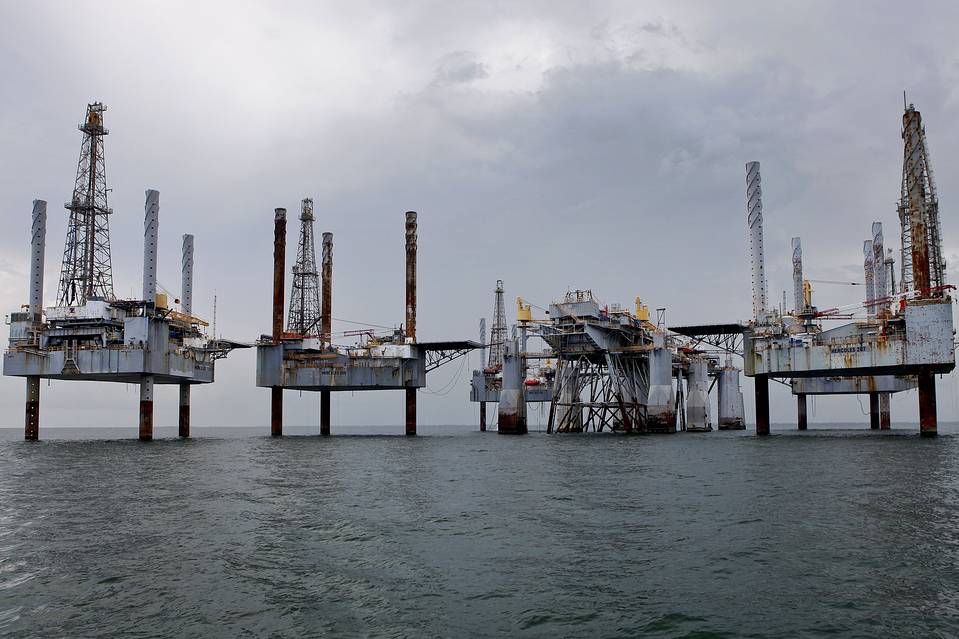
Analysts are likely to be pressing offshore specialists on the state of their contracts as they report first-quarter earnings, beginning with Hercules Offshore on Wednesday. PHOTO: BLOOMBERG NEWS
By
DAN MOLINSKI/WSJ
April 28, 2015 3:48 p.m. ET
Offshore drillers are bracing for a wave of contract cancellations as energy companies try to cut their costs to cope with low oil prices.
Big oil and gas companies lease drilling rigs and crews from oil-field-services companies, often for years at a time and at a cost of up to $400,000 a day. The industry has long considered these leases basically unbreakable.
But now several drilling companies have reported that clients including BP PLC and some government-owned energy companies are trying to get out of leasing deals—and analysts say a flood may follow.
“We expect additional contract cancellations,” said Angie Sedita, an analyst at the investment bank UBS. “Offshore rigs could be offered for free and most oil companies would still not want to drill.”
Analysts are likely to be pressing offshore specialists on the state of their contracts as they report first-quarter earnings, beginning with Hercules Offshore Inc. on Wednesday.
In the past, energy companies’ worries about their ability to hire rigs in the future kept them from backing out of leases, analysts said. But that has changed now that global oil prices have dropped from over $100 a barrel last spring to about $65 a barrel.
BP said Tuesday that it was paying $375 million to cancel contracts for two deep-water rigs in the Gulf of Mexico. The company, which previously announced it was terminating deals with Ensco PLC and Seadrill Partners LLC, no longer needs the rigs after cutting spending “in response to the new, lower oil price environment,” spokesman Brett Clanton said. Ensco has said that BP was required to pay a lump sum of $160 million to end its lease a year early; Seadrill didn’t respond to requests for comment regarding any early termination fee.
Earlier this year, Hercules, a Houston-based driller, said Saudi Aramco terminated its drilling contract for a shallow water rig.
‘Offshore rigs could be offered for free and most oil companies would still not want to drill.’
—UBS analyst Angie Sedita
Diamond Offshore Drilling Inc., also based in Houston, has been preparing for the termination of six of its rig contracts—four with Mexico’s Petróleos Mexicanos, one with Brazil’s Petróleo Brasileiro SA and one with U.K.-based Dana Petroleum.
In many cases, drilling companies will try to accommodate their cost-cutting customers rather than lose a lease, said Darren Daugherty, director of investor relations at Diamond Offshore.
“We work with customers to try to find mutually agreeable outcomes for both shareholders and customers,” he said.
Jackson Sandeen, senior analyst for Wood Mackenzie, said the cancellations were surprising. “This is something new,” he said. “It’s abnormal, the idea of cutting these contracts.”
Some big energy companies remain committed to offshore drilling deals; Royal Dutch Shell PLC is going ahead with billion-dollar efforts to drill for oil in the Arctic. Hercules recently announced a 5-year contract with Italy’s Eni SpA to lease one of its so-called jack-up rigs—which stand on the ocean floor—in West Africa for at least $75,000 a day.
Drillers may offer cheaper day rates on rigs if the oil companies agree to add a few years to a contract, said Jim Thompson, a lawyer in Houston with Vinson & Elkins who focuses on energy-related disputes. Such deals are sometimes called “blend and extend” agreements.
But if oil companies simply want walk away from offshore rig contracts with lower oil prices as their excuse, Mr. Thompson said it won’t be easy.
“If the gloves come off, there are very few outs for” oil companies, he said, adding that government-owned firms sometimes have more flexible contracts.
Either way, drilling companies are generally reluctant to sue their main clients.
They “have to be careful about winning the battle and losing the war,” said Bill Herbert,an analyst at Simmons & Co., adding that a fight could fundamentally impair customer relationships.
 Brazil Energy Insight
Leave a comment